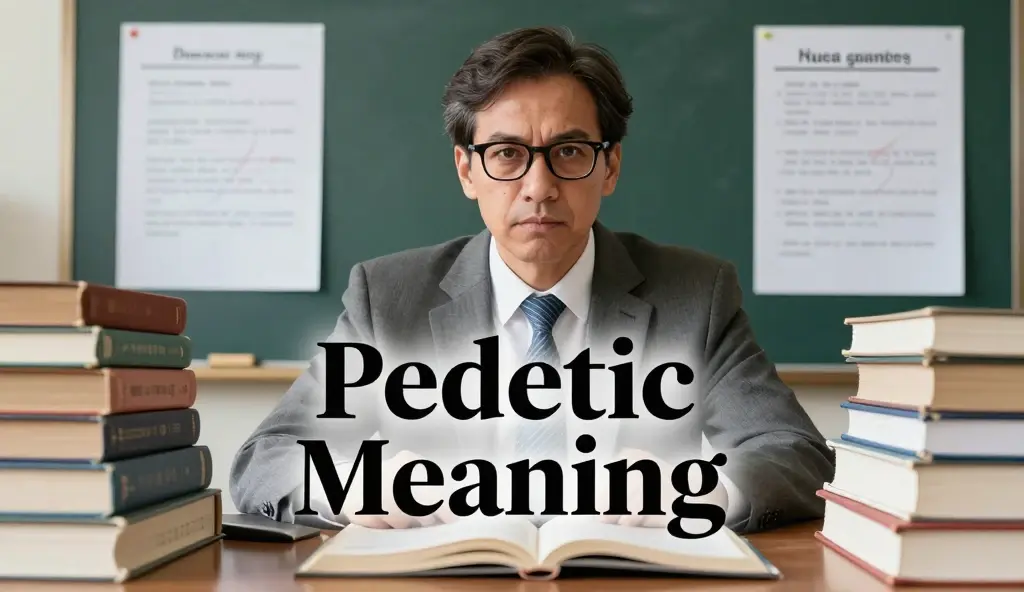
The word pedantic is commonly used to describe people who focus excessively on small details, technicalities, or rules especially in conversations, teaching, writing, or debates.
Many people search for the exact pedantic meaning after hearing phrases like:
- “Stop being so pedantic.”
- “His explanation sounded pedantic.”
- “She corrected every tiny detail.”
- “That teacher is extremely pedantic.”
Although the word often has a negative tone, it can sometimes describe someone who is:
- Highly knowledgeable
- Academically precise
- Detail-oriented
- Technically accurate
However, when people use “pedantic” critically, they usually mean:
Someone is overly concerned with minor details or formal correctness in a way that feels annoying or unnecessary.
The term appears frequently in:
- Education
- Workplace communication
- Academic discussions
- Internet debates
- Literature analysis
- Personality descriptions
In this complete guide, you’ll learn:
- The exact pedantic meaning
- Dictionary definition
- Examples of pedantic behavior
- Psychology behind pedantry
- Positive vs negative interpretations
- Pedantic personality traits
- Synonyms and opposites
- Common misunderstandings
- FAQs people search online daily
This article explains the word clearly while also exploring how pedantic behavior affects communication, relationships, and modern social interactions.
What Does Pedantic Mean?
The word pedantic means:
Being overly concerned with small details, formal rules, or technical correctness.
A pedantic person may:
- Correct tiny mistakes
- Focus excessively on precision
- Prioritize technical accuracy over practical communication
Simple Definition of Pedantic
In plain English:
Pedantic means paying too much attention to minor details or correctness in a way that may seem irritating.
Quick Definition Table
| Word | Meaning |
| Pedantic | Excessively focused on details or formal correctness |
Pronunciation of Pedantic
Pedantic is pronounced:
puh-DAN-tik
Phonetic spelling:
/pɪˈdæn.tɪk/
Origin of the Word Pedantic
The word comes from:
“Pedant”
which historically referred to:
- Schoolteachers
- Scholars
- Educated individuals
Over time, the meaning evolved into someone who:
- Shows off knowledge excessively
- Focuses too heavily on technicalities
Example of Pedantic Behavior
Conversation Example
Person A:
“I visited England last year.”
Person B:
“Technically, you visited the United Kingdom, not just England.”
Pedantic
because it focuses on unnecessary precision.
Why People Call Others Pedantic
People usually use the word when someone:
- Interrupts with corrections
- Focuses on trivial details
- Prioritizes accuracy over context
- Sounds overly academic
Pedantic Meaning in Everyday Life
- Classrooms
- Meetings
- Online arguments
- Technical discussions
- Grammar debates
Pedantic vs Intelligent
Being intelligent does not automatically mean being pedantic.
Intelligent People
Often:
- Explain clearly
- Adapt communication
- Prioritize understanding
Pedantic People
May:
- Over-explain
- Focus on technicalities
- Correct unnecessary details
Quick Comparison Table
| Intelligent | Pedantic |
| Clear communication | Excessive correction |
| Practical understanding | Technical obsession |
| Flexible | Rigid |
| Helpful | Sometimes annoying |
Is Pedantic Always Negative?
Usually yes, but not always.
In some situations, pedantic behavior can be useful:
- Scientific work
- Law
- Engineering
- Medicine
- Academic research
Precision matters in these fields.
Positive Side of Being Pedantic
Pedantic people may be:
- Accurate
- Thorough
- Detail-oriented
- Careful thinkers
Negative Side of Being Pedantic
Excessive pedantry can make communication:
- Frustrating
- Condescending
- Overcomplicated
- Socially awkward
Pedantic Personality Traits
Pedantic individuals often:
- Value correctness strongly
- Enjoy technical accuracy
- Notice small mistakes
- Prefer structure and rules
- Dislike ambiguity
Why Some People Become Pedantic
Possible reasons include:
- Academic training
- Perfectionism
- Anxiety about accuracy
- Desire for intellectual control
- Strong attention to detail
Pedantic Meaning in Psychology
Psychologically, pedantic behavior may relate to:
- Perfectionism
- Need for precision
- Cognitive rigidity
- High conscientiousness
Pedantic Communication Style
A pedantic communication style often includes:
- Long explanations
- Frequent corrections
- Technical language
- Excessive detail
Example of Pedantic Writing
Instead of:
“The project succeeded.”
a pedantic explanation might include:
- Excessive technical clarification
- Tiny distinctions
- Unnecessary formal detail
Pedantic Teachers
Some teachers are described as pedantic because they:
- Over-focus on rules
- Emphasize tiny errors
- Prioritize exact wording excessively
Is Pedantic Similar to Perfectionist?
They overlap somewhat.
Perfectionist
Focuses on:
- High standards
- Avoiding mistakes
Pedantic
Focuses on:
- Technical correctness
- Small details
- Formal precision
Pedantic Meaning in Internet Culture
Online, “pedantic” often appears during:
- Grammar arguments
- Technical debates
- Reddit discussions
- Comment section corrections
Example Internet Comment
“You’re being pedantic.”
Meaning:
You’re focusing too much on minor details instead of the main point.
Pedantic vs Semantic Arguments
Pedantic arguments often become:
Semantic debates
where people argue over:
- Definitions
- Wording
- Technical distinctions
instead of broader meaning.
Why Pedantry Can Hurt Communication
Effective communication usually prioritizes:
- Clarity
- Understanding
- Context
Excessive pedantry can interrupt these goals.
Pedantic in Literature
Writers sometimes create pedantic characters to portray:
- Intellectual arrogance
- Social awkwardness
- Academic obsession
- Excessive formality
Pedantic Speech Examples
Example 1
“Actually, technically speaking…”
Example 2
“That’s not entirely accurate.”
Example 3
“Your grammar is incorrect.”
Synonyms for Pedantic
Common synonyms include:
- Overly academic
- Nitpicky
- Picky
- Formalistic
- Over-precise
- Bookish
Opposites of Pedantic
Opposites include:
- Casual
- Flexible
- Practical
- Relaxed
- Informal
Can Pedantic People Be Helpful?
Yes.
Pedantic individuals may excel in fields requiring:
- Precision
- Accuracy
- Technical detail
- Error detection
Careers Where Pedantic Traits Help
These traits may benefit:
- Lawyers
- Editors
- Scientists
- Engineers
- Programmers
- Researchers
When Pedantry Becomes a Problem
Pedantic behavior becomes frustrating when:
- Tiny details derail conversations
- Corrections feel unnecessary
- Communication loses simplicity
Real-Life Examples of Pedantic Usage
Example 1: Workplace
“The manager was pedantic about formatting.”
Example 2: Debate
“He ignored the main issue and became pedantic.”
Example 3: Classroom
“Her lectures were informative but overly pedantic.”
Common Misunderstandings About Pedantic
Mistake 1: Thinking Pedantic Means Smart
Pedantry refers to excessive detail focus, not intelligence itself.
Mistake 2: Assuming Pedantic Is Always Bad
In technical fields, precision can be valuable.
Mistake 3: Confusing Pedantic With Perfectionist
They overlap but are not identical.
Why People Search “Pedantic Meaning”
People search the word because:
- It appears in debates
- Teachers or coworkers use it
- Online discussions mention it
- The term sounds intellectual
Long-Tail Keywords Related to Pedantic Meaning
People also search:
- What does pedantic mean?
- Pedantic definition
- Pedantic personality meaning
- Is pedantic negative?
- Pedantic examples
- Pedantic vs perfectionist
- Pedantic communication style
- Why are people pedantic?
- Pedantic behavior meaning
Semantic SEO Topics Related to Pedantic
Closely related entities include:
- Perfectionism
- Grammar correction
- Communication styles
- Academic personality
- Debate culture
- Detail-oriented behavior
- Intellectualism
- Technical accuracy
Short Voice Search Answer
Pedantic means paying excessive attention to minor details or technical correctness.
FAQs
1. What does pedantic mean?
A: Pedantic means excessively focused on details or correctness.
2. Is pedantic an insult?
A: Often yes, though context matters.
3. What is a pedantic person?
A: Someone overly concerned with technical details and accuracy.
4. Is being pedantic bad?
A: Not always. It can help in precise technical fields.
5. What’s the difference between pedantic and perfectionist?
A: Pedantic focuses more on correctness and technical detail.
6. Why do people call others pedantic?
A: Usually because they over-correct or focus on trivial details.
7. Is pedantic the same as smart?
A: No. Intelligence and pedantry are different concepts.
8. Can teachers be pedantic?
A: Yes. Some teachers overemphasize tiny technical details.
9. What are examples of pedantic behavior?
A: Constant corrections and excessive technical explanations.
10. Is pedantic formal?
A: Yes. The word itself is relatively formal.
11. What’s the opposite of pedantic?
A: Practical, flexible, or casual.
12. Why does pedantic behavior annoy people?
A: Because it can interrupt communication flow and feel unnecessary.
13. Can pedantic people be helpful
A: Absolutely, especially in detail-heavy professions.
14. Is pedantic used online?
A: Very commonly in internet debates and comment sections.
15. How do you pronounce pedantic?
It’s pronounced:
puh-DAN-tik.
Conclusion:
The pedantic meaning centers around:
Excessive focus on small details, technical correctness, or formal accuracy.
Although the term often carries a negative tone, pedantic traits can sometimes be valuable in:
- Science
- Law
- Editing
- Engineering
- Research
The key difference lies in:
- Balance
- Context
- Communication effectiveness
Healthy precision improves understanding, while excessive pedantry may:
- Distract conversations
- Frustrate listeners
- Overcomplicate simple ideas
Understanding pedantic behavior helps improve:
- Communication
- Social awareness
- Workplace interaction
- Debate skills
- Emotional intelligence
In modern language, calling someone pedantic usually suggests they care more about tiny technical details than the broader point being discussed.

Natalie is known for creating informative and inspiring articles about names, relationships, emotions, and motivational meanings for modern audiences.