
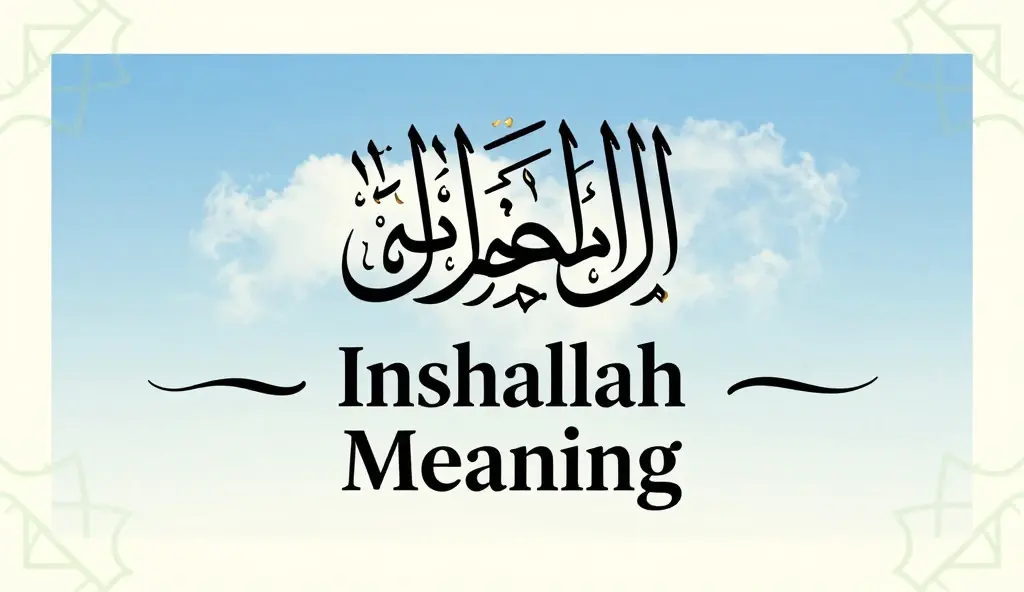
The phrase Inshallah is one of the most widely used expressions in the Arabic-speaking world and across Muslim communities globally. You may hear it in:
- daily conversations
- religious discussions
- family interactions
- business meetings
- social media
- travel experiences
- multicultural communication
People say:
- “I’ll see you tomorrow, inshallah.”
- “We’ll finish the project next week, inshallah.”
- “Inshallah everything goes well.”
- “We’ll travel this summer, inshallah.”
But what exactly does Inshallah meaning involve? Is it purely religious, or does it also function as a cultural and conversational expression?
This complete guide explores everything about inshallah meaning, including pronunciation, Arabic origin, Islamic significance, cultural usage, psychology, modern internet usage, examples, and global relevance.
What Does Inshallah Mean?
Inshallah Meaning Explained
Inshallah means:
“If God wills”
or
“God willing”
The phrase expresses hope or intention for a future event while acknowledging that ultimate control belongs to God.
Simple Definition of Inshallah
Short Definition
Inshallah means:
“If God wants it to happen.”
Pronunciation of Inshallah
Inshallah is commonly pronounced:
in-SHAH-lah
Phonetic spelling:
/ɪnˈʃɑː.lɑː/
Arabic pronunciation may vary slightly by region.
The Arabic Origin of Inshallah
The phrase comes from Arabic:
- In = if
- sha’a = willed
- Allah = God
Together:
“If Allah wills.”
Religious Meaning of Inshallah
In Islam, the phrase reflects:
- humility
- faith
- trust in God
- acceptance of divine will
Muslims commonly use it when discussing future plans.
Why Muslims Say Inshallah
The expression reminds believers that:
- humans cannot fully control the future
- life is uncertain
- God’s will is supreme
It encourages both hope and humility.
Inshallah in the Quran
The concept appears in the Quran, where believers are advised not to speak confidently about future events without acknowledging God’s will.
This reinforces the spiritual importance of the phrase.
Inshallah Meaning in Everyday Conversation
In daily life, inshallah often means:
- hopefully
- if everything goes well
- with God’s blessing
- assuming circumstances allow
Example:
“We’ll meet tomorrow, inshallah.”
Meaning:
The speaker hopes the meeting happens but recognizes uncertainty.
Is Inshallah Only Religious?
Not always.
While deeply rooted in Islam, many people use inshallah culturally and conversationally — including:
- Arab Christians
- multilingual communities
- non-religious speakers in some regions
Countries Where Inshallah Is Commonly Used
The phrase is widely used in:
- Saudi Arabia
- Pakistan
- Egypt
- Morocco
- Turkey
- United Arab Emirates
and many Muslim communities worldwide.
Why Inshallah Became Globally Recognized
Global migration, internet culture, and international media helped spread Arabic expressions internationally.
Today, many non-Arabic speakers recognize:
- inshallah
- mashallah
- alhamdulillah
Inshallah Meaning in Muslim Culture
The phrase reflects:
- patience
- optimism
- surrender to divine wisdom
- spiritual mindfulness
It reinforces awareness that life remains unpredictable.
Psychological Meaning of Inshallah
Psychologically, the phrase can reduce anxiety by encouraging people to:
- accept uncertainty
- release excessive control
- remain hopeful
- trust larger outcomes
Faith-based language often provides emotional comfort.
How Inshallah Builds Social Connection
Shared spiritual phrases strengthen:
- cultural identity
- religious belonging
- emotional connection
- communal trust
In many communities, saying inshallah feels warm and respectful.
Different Ways People Use Inshallah
Genuine Hope
“Inshallah you recover soon.”
Future Planning
“We’ll travel next month, inshallah.”
Polite Uncertainty
Sometimes people use it when they are unsure or hesitant.
Example:
“I’ll try to come, inshallah.”
This may subtly imply uncertainty.
Why Inshallah Can Sound Vague
Depending on tone and culture, inshallah may mean:
- sincere commitment
- cautious hope
- polite noncommittal response
Context matters greatly.
Inshallah vs Mashallah
These phrases are different.
Inshallah
Refers to future events:
“If God wills.”
Mashallah
Expresses admiration or gratitude:
“What God has willed.”
Inshallah vs Alhamdulillah
Inshallah
Future-oriented.
Alhamdulillah
Means:
“Praise be to God.”
Usually used after something has happened.
Inshallah Meaning in Internet Culture
Online, people sometimes use inshallah:
- humorously
- sincerely
- ironically
- culturally
It appears widely in:
- memes
- TikTok
- Twitter/X
- Instagram captions
Why Non-Muslims Sometimes Use Inshallah
Many non-Muslims adopt the phrase because:
- they grew up around Arabic speakers
- they appreciate the expression
- it entered multicultural vocabulary
- it communicates hope elegantly
Inshallah Meaning in Business and Professional Settings
In some cultures, inshallah appears frequently in:
- negotiations
- scheduling
- planning discussions
International professionals often encounter it in Middle Eastern business environments.
Cultural Differences in Interpreting Inshallah
In some places, “inshallah” strongly implies commitment.
Elsewhere, it may imply:
- uncertainty
- delay
- politeness
Understanding cultural nuance is important.
Why the Phrase Feels Spiritually Powerful
Inshallah combines:
- hope
- humility
- faith
- uncertainty
- trust
This emotional and spiritual depth gives the phrase lasting cultural importance.
How to Use Inshallah in a Sentence
Example 1
“We’ll succeed, inshallah.”
Example 2
“Inshallah the weather stays good.”
Example 3
“I’ll visit next year, inshallah.”
Example 4
“Everything will work out, inshallah.”
Why Faith-Based Expressions Endure
Faith expressions survive across generations because they help people:
- process uncertainty
- express hope
- connect socially
- find emotional reassurance
Inshallah fulfills all these functions.
Inshallah Meaning in Modern Global Society
Today, inshallah exists simultaneously as:
- a religious phrase
- a cultural tradition
- a conversational expression
- an internet meme
- a symbol of identity
Its meaning continues evolving globally.
Expert Insight: Why Humans Use Expressions Like Inshallah
Humans naturally seek ways to:
- cope with uncertainty
- express hope
- acknowledge limits of control
Phrases like inshallah provide psychological and emotional balance during uncertain situations.
Common Misunderstandings About Inshallah
Mistake #1: Thinking Only Muslims Say It
Many Arabic-speaking Christians also use the phrase culturally.
Mistake #2: Assuming It Means Lack of Planning
People can plan carefully while still acknowledging uncertainty.
Mistake #3: Believing It Always Means “No”
Sometimes it genuinely means hopeful intention rather than avoidance.
Synonyms and Similar Expressions
Related English expressions include:
- God willing
- hopefully
- if all goes well
- with luck
However, none perfectly capture the cultural and spiritual depth of inshallah.
Antonyms of Inshallah
Opposite attitudes may include:
- absolute certainty
- overconfidence
- complete self-reliance
Why Inshallah Remains Important
The phrase remains deeply meaningful because it balances:
- optimism
- humility
- spirituality
- realism
Few expressions communicate all those ideas so efficiently.
FAQs
1. What does inshallah mean?
Inshallah means:
“If God wills” or “God willing.”
2. How do you pronounce inshallah?
It’s pronounced:
“in-SHAH-lah.”
3. Is inshallah Arabic?
A: Yes. The phrase comes from Arabic.
4. Do only Muslims say inshallah?
A: No. Many Arabic-speaking Christians also use it culturally.
5. Why do Muslims say inshallah?
A: To acknowledge that the future ultimately depends on God’s will.
6. Is inshallah religious?
A: Yes, but it’s also widely cultural and conversational.
7. What’s the difference between inshallah and mashallah?
A: Inshallah refers to future hope, while mashallah expresses admiration or gratitude.
8. Can non-Muslims say inshallah?
A: Yes. Many non-Muslims use it respectfully in multicultural settings.
9. Does inshallah always mean uncertainty?
A: Not always. Context and tone matter.
10. Is inshallah used online?
A: Very commonly in memes, social media, and digital conversations.
11. What language is inshallah from?
A: Arabic.
12. Why is inshallah important in Islam?
A: It reflects humility and trust in divine will.
13. Is “God willing” the same as inshallah?
A: Very similar, though inshallah carries specific Arabic and Islamic cultural depth.
14. Can inshallah sound sarcastic?
A: Occasionally, depending on tone and context.
15. Is inshallah used worldwide?
A: Yes. It’s recognized globally across many cultures.
Final Thoughts on Inshallah Meaning
Understanding inshallah meaning reveals far more than a simple phrase about the future.
It represents:
- hope
- humility
- spirituality
- patience
- cultural identity
- emotional resilience
For millions of people worldwide, inshallah functions as both a practical conversational phrase and a profound reminder that life remains uncertain and ultimately beyond complete human control.
Its enduring popularity reflects humanity’s timeless need for:
- hope
- faith
- acceptance
- emotional reassurance
in an unpredictable world.
Key Takeaways
- Inshallah means “If God wills”
- The phrase comes from Arabic
- It is deeply important in Islam
- Inshallah expresses hope and humility
- The phrase is also widely cultural and conversational
- Context affects whether it sounds certain or uncertain
- Inshallah became globally recognized through multicultural communication
Conclusion:
The enduring significance of inshallah meaning reflects humanity’s universal relationship with uncertainty, hope, and faith.
From religious devotion and cultural tradition to everyday speech and internet culture, the phrase continues connecting millions of people through a shared acknowledgment:
that while humans may plan for the future, ultimate outcomes remain beyond complete control.
That combination of realism, spirituality, and hope is what gives inshallah its remarkable emotional and cultural power.

James is an experienced SEO content creator who writes about trending meanings, cultural phrases, and educational topics with clarity and accuracy.