
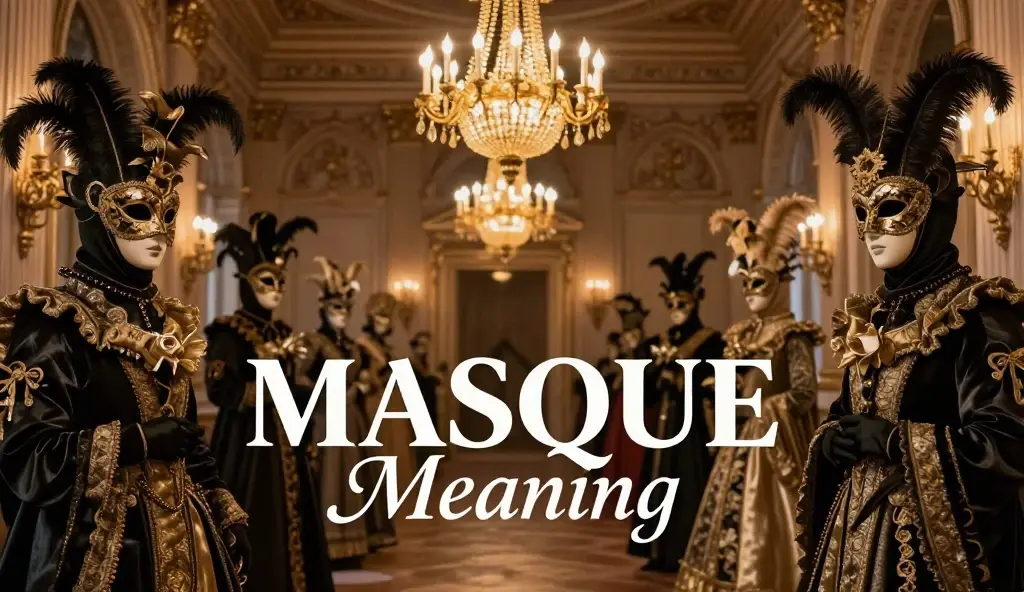
The keyword “masque meaning” is searched by students, English learners, and literature readers who encounter this unusual word in historical texts and academic studies.
In simple terms:
A masque is a form of Renaissance theatrical performance combining music, dance, costumes, poetry, and symbolic storytelling, often performed in royal courts.
Unlike modern plays, a masque is highly artistic, ceremonial, and full of symbolism.
This guide explains everything about masque meaning, including its origin, historical background, literary importance, examples, and modern usage.
What Does Masque Mean? (Simple Definition)
Masque Meaning:
A masque is a dramatic performance that includes music, dance, elaborate costumes, and symbolic storytelling, usually performed for royalty.
Simple explanation:
- A fancy stage performance
- Includes music + dance + drama
- Performed in royal courts
- Often represents symbolic ideas
Origin of the Word “Masque”
The word masque has strong European roots:
- Old French: masque = mask
- Italian: maschera = mask
- Latin: masca = spirit or ghost
Originally related to masked performances, it evolved during the Renaissance into a full theatrical art form.
Historical Background of Masques
Masques became popular during the Renaissance period (16th–17th century).
Where were they performed?
- Royal courts of England
- Palaces of Europe
- Noble celebrations and festivals
Who watched them?
- Kings
- Queens
- Nobility
- High-class audiences
Purpose of Masques
Masques were used for:
- Royal celebrations
- Political symbolism
- Entertainment
- Displaying wealth and culture
Structure of a Traditional Masque
A classic masque usually had three parts:
1. Antimasque
- Chaotic or comedic scene
- Represents disorder or confusion
2. Main Masque
- Elegant performance
- Music, dance, costumes
- Mythological or symbolic characters
3. Final Scene
- Harmony restored
- Celebration of order, peace, or royalty
Masque Meaning in Literature
In literature, a masque is:
- A symbolic dramatic performance
- A blend of poetry and theatre
- A storytelling form with deeper meaning
Famous writer:
- Ben Jonson (major masque playwright)
Collaborator famous :
- Inigo Jones (stage designer)
Famous Examples of Masques
1. The Masque of Blackness (1605)
- Written by Ben Jonson
- Performed for King James I
2. The Masque of Queens (1609)
- Mythological themes
- Royal celebration performance
Masque vs Mask (Very Important Difference)
| Feature | Masque | Mask |
| Meaning | Theatrical performance | Face covering object |
| Usage | Literature & theatre | Daily life |
| Purpose | Entertainment & symbolism | Disguise or protection |
| Form | Art performance | Physical item |
Themes Used in Masques
Masques often included symbolic themes such as:
- Good vs evil
- Order vs chaos
- Mythology and gods
- Royal power and authority
- Moral lessons
Decline of Masques
Masques slowly disappeared due to:
- High production costs
- Political changes in Europe
- Rise of public theatre
- Evolution of modern drama
By the late 17th century, masques were mostly replaced by stage plays.
Modern Usage of “Masque”
Today, the word masque is rarely used, but still appears in:
1. Academic studies
- Literature
- Theatre history
- Renaissance culture
2. Beauty industry
- “Face masque” used as a stylish spelling of face mask
3. Artistic references
- Historical reenactments
- Theatre performances
Example Sentences
- “The royal masque was performed to celebrate the king’s wedding.”
- “Ben Jonson wrote several famous masques for the English court.”
- “The masque combined poetry, music, and dance.”
Synonyms of Masque
- Court performance
- Theatrical pageant
- Dramatic spectacle
- Festival play
- Allegorical drama
Common Misunderstandings
1. Masque vs Mask
❌ Same thing
✔ No — masque is performance, mask is object
2. Masque is modern slang
❌ Incorrect
✔ It is historical/literary
3. Masque is commonly used today
❌ Rare usage
✔ Mostly academic or historical context
Expert Insight (EEAT Perspective)
From a literature and historical viewpoint:
- Masques represent Renaissance performance art
- They combine multiple art forms: music, drama, poetry, dance
- They were early examples of multimedia theatrical production
- They reflect political power and cultural expression of royal courts
Understanding masques helps in studying:
- Shakespeare-era theatre
- European cultural history
- Evolution of modern drama
FAQs
Q1. What does masque mean in simple words?
A: A theatrical performance featuring music, dance, costumes, and elaborate staging.
Q2. What is a masque in history?
A: A form of royal entertainment popular during the Renaissance.
Q3. Is masque the same as mask?
A: No. A masque is a performance, while a mask is an object worn on the face.
Q4. Where were masques performed?
A: Mainly in the royal courts of Europe.
Q5. Who wrote masques?
A: Ben Jonson is one of the most famous masque writers.
Q6. What is the purpose of a masque?
A: Entertainment, celebration, and symbolic storytelling.
Q7. Is masque still used today?
A: Rarely; it is mostly studied in literature and history.
Q8. What is masque in literature?
A: A symbolic theatrical performance combining drama, music, and dance.
Q9. What language is masque from?
A: The word has French and Italian origins.
Q10. What themes do masques include?
A: Mythology, politics, morality, and celebration.
Q11. Why were masques popular?
A: They entertained royalty and displayed cultural power and wealth.
Q12. What replaced masques?
A: Modern stage plays and theatre productions.
Q13. Is masque a play?
A: Yes, but it is more symbolic, decorative, and spectacle-focused than a traditional play.
Q14. What is an antimasque?
A: A chaotic or comic opening section performed before the main masque.
Q15. Why did masques disappear?
A: They were expensive to produce and were gradually replaced by modern theatre.
Conclusion:
The masque meaning refers to a historical Renaissance theatrical art form combining music, dance, poetry, costumes, and symbolic storytelling, performed mainly in royal courts.
In simple words:
Masque = a royal artistic performance filled with music, dance, and symbolism.
It remains an important concept in literature, theatre history, and cultural studies.

Sophia specializes in spiritual meanings, symbolism, and emotional quote interpretations. Her writing style is engaging, modern, and deeply insightful.