
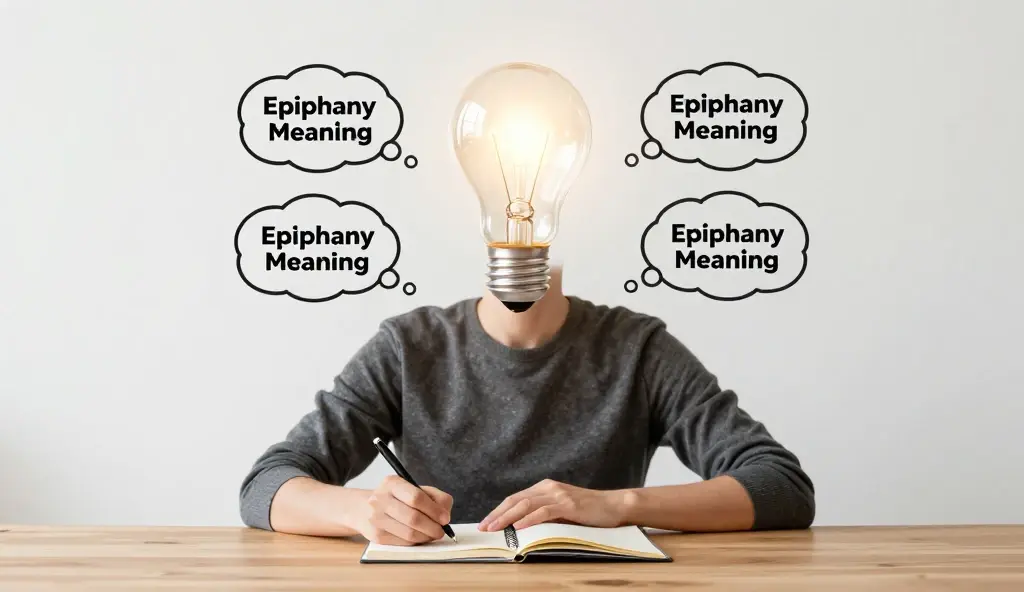
The word epiphany is one of the most powerful terms in the English language because it describes a sudden moment of deep realization or understanding. People use it in:
- everyday conversations
- psychology
- religion
- literature
- movies
- self-improvement
- emotional storytelling
You may hear phrases like:
- “I had an epiphany.”
- “That moment changed everything.”
- “She experienced a sudden realization.”
- “It was a life-changing epiphany.”
But what exactly does epiphany meaning involve? Is it simply an idea, or something more emotional and transformative?
This complete guide explores everything about epiphany meaning, including definition, pronunciation, psychology, spiritual significance, emotional impact, literary usage, examples, and modern cultural relevance.
What Does Epiphany Mean?
Epiphany Meaning Explained
An epiphany means:
A sudden realization, insight, or understanding that changes the way someone sees something.
An epiphany often feels:
- powerful
- emotional
- eye-opening
- transformative
It may happen suddenly after:
- reflection
- conversation
- experience
- emotional struggle
Simple Definition of Epiphany
Short Definition
Epiphany means:
A sudden moment of understanding or realization.
Pronunciation of Epiphany
Epiphany is pronounced:
ih-PIF-uh-nee
Phonetic spelling:
/ɪˈpɪf.ə.ni/
The Origin of the Word Epiphany
The word comes from Greek:
epiphaneia
meaning:
manifestation or appearance.
Historically, the term had strong religious significance before expanding into everyday language.
Epiphany Meaning in Everyday Life
In daily conversation, epiphany describes moments when:
- confusion suddenly becomes clarity
- problems suddenly make sense
- perspectives dramatically change
Example:
“I had an epiphany about my career.”
Meaning:
The person suddenly understood something important about their future.
Why Epiphanies Feel Powerful
Epiphanies often trigger:
- emotional release
- mental clarity
- motivation
- personal growth
The brain experiences satisfaction when disconnected ideas suddenly connect.
Epiphany Meaning in Psychology
Psychologically, an epiphany represents:
- sudden cognitive insight
- breakthrough understanding
- mental restructuring
These moments occur when the brain unconsciously processes information and suddenly produces clarity.
Why the Brain Creates Epiphanies
The human brain constantly:
- analyzes patterns
- stores experiences
- connects ideas subconsciously
Sometimes understanding emerges suddenly after long periods of uncertainty.
This creates the feeling of:
“Everything finally makes sense.”
Examples of Everyday Epiphanies
Example 1
Realizing a toxic relationship is harming your mental health.
Example 2
Understanding your true career passion.
Example 3
Suddenly solving a difficult problem after struggling for days.
Example 4
Recognizing a life habit that needs to change.
Epiphany Meaning in Religion
The word also has important religious meaning.
In Christianity, Epiphany refers to:
The revelation of Jesus Christ to the world.
The holiday is celebrated on January 6 in many Christian traditions.
Religious Meaning of Epiphany
Religious epiphany involves:
- divine revelation
- spiritual manifestation
- sacred realization
This older meaning influenced the modern idea of sudden enlightenment.
Epiphany vs Realization
These words are similar but slightly different.
Realization
General understanding.
Epiphany
A deeper, sudden, emotionally impactful realization.
An epiphany usually feels more dramatic and transformative.
Epiphany vs Revelation
Revelation
Can involve discovering hidden information.
Epiphany
Usually refers to internal understanding or insight.
Why Epiphanies Often Happen Unexpectedly
Many epiphanies occur during:
- walking
- showering
- driving
- relaxing
- sleeping
- emotional conversations
This happens because relaxed mental states improve subconscious processing.
Epiphany Meaning in Literature
Writers frequently use epiphanies to create:
- character growth
- emotional turning points
- dramatic transformation
An epiphany often changes a story’s direction completely.
Famous Literary Epiphanies
Characters in literature may suddenly realize:
- truth about themselves
- hidden motives
- moral lessons
- emotional realities
These moments create emotional impact for readers.
Epiphany Meaning in Movies
Movies commonly build toward epiphany scenes where characters suddenly:
- understand their purpose
- discover truth
- change emotionally
- solve mysteries
These moments often become the emotional climax.
Why Humans Love Epiphany Stories
People emotionally connect with epiphany moments because they reflect:
- growth
- transformation
- hope
- self-discovery
Humans naturally admire moments of sudden understanding.
What Causes Personal Epiphanies?
Epiphanies may emerge from:
- emotional stress
- reflection
- therapy
- failure
- heartbreak
- learning experiences
Sometimes painful experiences trigger the deepest insights.
Can Epiphanies Change Lives?
Yes.
Major epiphanies can influence:
- relationships
- careers
- identity
- beliefs
- mental health
- life direction
Some people completely transform after profound realizations.
Epiphany Meaning in Self-Improvement
Self-help and motivational communities often discuss epiphanies related to:
- purpose
- discipline
- mindset
- healing
- personal growth
These realizations can spark major behavioral change.
Why Emotional Pain Sometimes Creates Epiphanies
Struggle forces people to:
- question assumptions
- reevaluate priorities
- reflect deeply
This emotional intensity sometimes produces breakthrough insight.
Epiphany Meaning in Philosophy
Philosophers may connect epiphany with:
- consciousness
- enlightenment
- truth
- self-awareness
The concept relates closely to intellectual awakening.
Spiritual Epiphany vs Psychological Epiphany
Spiritual Epiphany
Feels connected to divine or transcendent understanding.
Psychological Epiphany
Focuses on mental insight and personal realization.
Some experiences combine both.
How to Use Epiphany in a Sentence
Example 1
“She had an epiphany about her future.”
Example 2
“The trip led to a life-changing epiphany.”
Example 3
“His epiphany completely changed his mindset.”
Example 4
“The character experiences an emotional epiphany.”
Why the Word Sounds Emotional
Epiphany carries emotional weight because it implies:
- transformation
- revelation
- awakening
- clarity
It feels stronger than ordinary understanding.
Epiphany Meaning in Modern Culture
Today, epiphany appears in:
- podcasts
- therapy discussions
- motivational content
- social media storytelling
- personal growth communities
The word became central to modern self-awareness culture.
Can Small Epiphanies Matter?
Absolutely.
Not all epiphanies are dramatic.
Small realizations can still improve:
- habits
- relationships
- productivity
- emotional wellbeing
Tiny insights sometimes create huge long-term change.
Why Reflection Helps Create Epiphanies
Reflection allows the brain to:
- organize emotions
- connect experiences
- identify patterns
This increases the chance of breakthrough understanding.
Expert Insight: Why Sudden Insight Feels Rewarding
Neuroscience suggests insight moments activate reward systems in the brain.
That’s why epiphanies often feel:
- exciting
- emotional
- memorable
- deeply satisfying
The mind enjoys solving uncertainty.
Common Misunderstandings About Epiphany
Mistake #1: Thinking Every New Idea Is an Epiphany
True epiphanies usually involve deeper emotional or cognitive transformation.
Mistake #2: Assuming Epiphanies Are Always Positive
Some realizations can feel painful or uncomfortable.
Mistake #3: Believing Epiphanies Only Happen Spiritually
Epiphanies also occur psychologically, emotionally, and intellectually.
Synonyms for Epiphany
Depending on context:
- realization
- insight
- awakening
- revelation
- breakthrough
- illumination
Antonyms of Epiphany
Opposite concepts include:
- confusion
- misunderstanding
- ignorance
- uncertainty
Why Epiphany Remains a Powerful Word
The word captures a universal human experience:
sudden understanding that changes perspective.
Almost everyone experiences meaningful realizations during life.
FAQs
1. What does epiphany mean?
A: Epiphany means a sudden realization or moment of deep understanding
2. How do you pronounce epiphany?
Epiphany is pronounced:
“ih-PIF-uh-nee.”
3. What is an example of an epiphany?
A: Realizing your true passion after years of uncertainty.
4. Is an epiphany emotional?
A: Often yes. Epiphanies can feel powerful and transformative
5. What causes epiphanies?
A: Reflection, emotional experiences, learning, and subconscious thinking.
6. Is epiphany a religious word?
A: Originally yes, but today it’s widely used in everyday language too.
7. What’s the difference between realization and epiphany?
A: Epiphany usually feels more sudden and life-changing.
8. Can epiphanies change lives?
A: Yes. Some realizations dramatically affect decisions and identity.
9. What does Epiphany mean in Christianity?
A: Epiphany celebrates the revelation of Jesus Christ.
10. Are epiphanies always positive?
A: No. Some realizations can feel painful or shocking.
11. Can small epiphanies matter?
A: Yes. Small insights may lead to long-term improvement.
12. Why do epiphanies happen suddenly?
A: The brain often processes information subconsciously before insight appears consciously.
13. Is epiphany used in literature?
A: Very commonly. It often marks character transformation.
14. Can therapy lead to epiphanies?
A: Yes. Reflection and emotional exploration often produce insight.
15. Is epiphany formal English?
A: It’s common in both formal and conversational English.
Final Thoughts on Epiphany Meaning
Understanding epiphany meaning reveals why sudden insight feels so emotionally powerful in human life.
An epiphany represents more than simply learning something new. It reflects:
- transformation
- awareness
- clarity
- emotional breakthrough
- perspective change
Whether spiritual, emotional, psychological, or intellectual, epiphanies often become defining moments that reshape how people:
- think
- feel
- behave
- understand themselves
These moments of sudden clarity remain some of the most meaningful experiences humans can have.
Key Takeaways
- Epiphany means a sudden realization or insight
- The word originally had religious significance
- Epiphanies often feel emotional and transformative
- The concept appears in psychology, literature, and self-improvement
- Sudden insight happens through subconscious mental processing
- Epiphanies can be positive or painful
- Small realizations can create major life changes
Conclusion:
The enduring importance of epiphany meaning reflects humanity’s deep connection to self-discovery and understanding.
From religion and philosophy to psychology and modern storytelling, epiphany captures the powerful moment when confusion transforms into clarity.
These moments remind us that growth often arrives suddenly sometimes changing an entire life through one profound realization.

A passionate content writer and meaning researcher specializing in word meanings, modern phrases, and inspirational quotes. Olivia creates easy-to-understand content for global readers.