The word abut is commonly used in:
- property descriptions
- real estate
- architecture
- law
- construction
- geography
- formal writing
Although it’s not an everyday casual word for many people, you may encounter it in sentences like:
- “The property abuts the highway.”
- “Their backyard abuts the river.”
- “The wall abuts the neighboring building.”
- “The land abuts protected forest area.”
Understanding abut meaning is important because the word appears frequently in:
- legal documents
- land records
- architectural plans
- zoning discussions
- formal descriptions of physical boundaries
This complete guide explains everything about abut meaning, including pronunciation, legal usage, property examples, synonyms, grammar, architecture applications, and real-world contexts.
What Does Abut Mean?
Abut Meaning Explained
Abut means:
To touch, border, or be next to something.
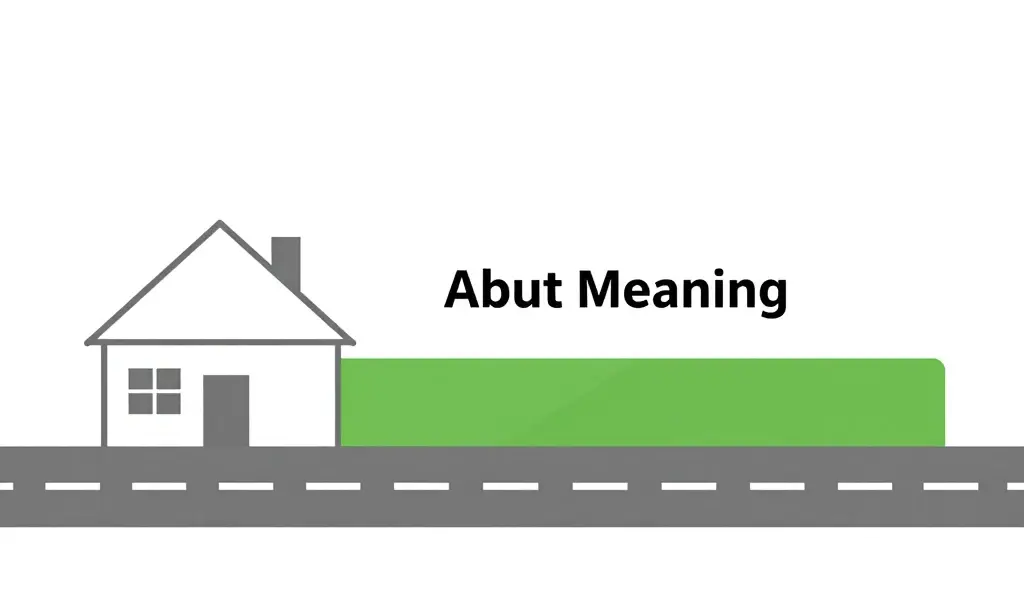
When one object or area abuts another, they directly meet at an edge or boundary.
Simple Definition of Abut
Short Definition
Abut means:
To border or directly touch something.
Pronunciation of Abut
Abut is pronounced:
uh-BUT
Phonetic spelling:
/əˈbʌt/
The Origin of the Word Abut
The word comes from Old French and Latin roots connected to:
- end points
- boundaries
- touching edges
Historically, the word developed through legal and land-related language.
How Abut Is Used in Everyday English
Abut usually describes physical boundaries between:
- land
- buildings
- walls
- roads
- rivers
- properties
Example:
“The garden abuts the fence.”
Meaning:
The garden directly touches the fence.
Abut Meaning in Real Estate
This is one of the most common uses.
In property descriptions, abut means:
A property directly borders another property or feature.
Examples:
- land abutting a highway
- property abutting a lake
- houses abutting a park
Why Abut Matters in Property Law
Abutting properties often involve issues such as:
- boundary rights
- easements
- zoning
- privacy
- access rights
Legal property documents frequently use the term for precision.
Example of Abut in Real Estate
“The property abuts public land.”
Meaning:
The property directly touches public land at its boundary.
Abut Meaning in Architecture
In architecture and construction, abut can describe:
- structures touching each other
- walls connecting
- bridge components meeting support structures
Abut Meaning in Engineering
Engineers may use abut when discussing:
- structural connections
- adjoining surfaces
- bridge abutments
The concept focuses on physical contact between structures.
What Is a Bridge Abutment?
A bridge abutment is:
The support structure at the end of a bridge.
It helps transfer weight and connect the bridge to the ground.
The term comes from the same root idea:
touching or adjoining.
Abut Meaning in Geography
Geographers may describe:
- regions
- forests
- rivers
- coastlines
as abutting one another when they share boundaries.
Example:
“The farmland abuts the national park.”
Why the Word Sounds Formal
Abut appears mostly in:
- legal language
- technical writing
- real estate documents
- architectural descriptions
Because of this, it sounds more formal than words like:
- touch
- border
- meet
Abut vs Adjacent
These words are similar but slightly different.
Adjacent
Means nearby or next to.
Abut
Specifically means directly touching at a boundary.
Two things can be adjacent without actually abutting.
Abut vs Border
These are extremely similar.
Border
More general and common.
Abut
More formal and precise.
Abut vs Touch
Touch can describe any physical contact.
Abut specifically implies:
- shared edges
- direct boundaries
- adjoining surfaces
Common Examples of Abut
Example 1
“Their backyard abuts a river.”
Example 2
“The two buildings abut each other.”
Example 3
“The land abuts protected wetlands.”
Example 4
“The fence abuts the neighbor’s garage.”
Why Precision Matters in Property Language
In legal and property matters, wording affects:
- ownership rights
- access permissions
- zoning rules
- disputes
Words like abut provide exact spatial meaning.
Abutting Property Meaning
An abutting property is:
Property that directly borders another property or structure.
This phrase appears frequently in:
- municipal regulations
- zoning laws
- tax assessments
Abut Meaning in Urban Planning
Urban planners use abut when discussing:
- neighborhood layouts
- transportation systems
- zoning boundaries
- infrastructure placement
Example:
“Residential lots abut commercial districts.”
Why Shared Boundaries Matter
Shared boundaries influence:
- noise
- privacy
- construction limits
- access
- property value
That’s why precise terms like abut remain important.
Abut in Formal Writing
Writers sometimes use abut to create:
- vivid spatial descriptions
- formal tone
- architectural clarity
Example:
“Stone walls abutted the ancient roadway.”
Is Abut Common in Casual Conversation?
Not usually.
Most people casually say:
- next to
- beside
- touching
- bordering
Abut is more common in formal or technical contexts.
Grammar of Abut
Present Tense
- abut
- abuts
Past Tense
- abutted
Present Participle
- abutting
Example Sentences With Different Forms
Present
“The building abuts the alley.”
Past
“The farm once abutted a forest.”
Present Participle
“The abutting walls required reinforcement.”
Abutting Meaning Explained
Abutting means:
directly adjoining or touching.
Example:
“Abutting landowners.”
Meaning:
Property owners whose lands touch.
Why Lawyers Use Abut
Legal professionals value precise wording.
Abut clearly communicates:
- direct contact
- exact positioning
- shared boundaries
This reduces ambiguity in contracts and land records.
Abut Meaning in Construction
Construction teams may discuss:
- abutting walls
- abutting structures
- abutting surfaces
These terms help define building relationships accurately.
Why Spatial Language Matters
Humans rely heavily on spatial concepts for:
- ownership
- navigation
- architecture
- safety
- planning
Words like abut help communicate physical relationships efficiently.
Expert Insight: Why Technical Words Persist
Even though simpler alternatives exist, technical terms survive because they provide:
- legal precision
- architectural clarity
- professional consistency
Abut remains valuable because it communicates exact physical adjacency.
Common Misunderstandings About Abut
Mistake #1: Thinking It Means “Almost Touching”
Abut means directly touching or adjoining.
Mistake #2: Assuming It’s Only Legal Language
The word also appears in architecture, geography, and engineering.
Mistake #3: Confusing Abut With Nearby
Abutting things share a boundary directly.
Synonyms for Abut
Depending on context:
- border
- adjoin
- touch
- meet
- neighbor
- connect with
Antonyms of Abut
Opposite concepts include:
- separate
- detach
- divide
- distance
Why Abut Appears in Official Documents
Official writing requires:
- accuracy
- reduced ambiguity
- consistent terminology
Abut efficiently describes shared boundaries without confusion.
FAQs
1. What does abut mean?
A: Abut means to directly touch or border something.
2. How do you pronounce abut?
Abut is pronounced:
“uh-BUT.”
3. What does abutting property mean?
A: Property that directly borders another property.
4. Is abut a legal term?
A: Yes. It’s commonly used in legal and property documents.
5. What’s the difference between abut and adjacent?
A: Adjacent means nearby, while abut means directly touching.
6. Can buildings abut each other?
A: Yes. Buildings can directly share walls or boundaries.
7. What is a bridge abutment?
A: A support structure at the end of a bridge.
8. Is abut formal English?
A: Yes. It sounds more formal and technical.
9. What’s the past tense of abut?
The past tense is:
abutted
10. Can land abut water?
A: Yes. Land can abut rivers, lakes, or oceans.
11. Is abut commonly used in conversation?
A: Not usually. It appears more in formal writing.
12. What does abutting mean?
A: Abutting means adjoining or directly touching.
13. Is abut used in architecture?
A: Yes. Architects and engineers use it frequently.
14. Does abut imply physical contact?
A: Yes. Direct boundary contact is essential to the meaning.
15. Why is abut important in property law?
A: Because boundary definitions affect ownership and legal rights.
Final Thoughts on Abut Meaning
Understanding abut meaning helps clarify how professionals describe physical boundaries with precision.
Whether used in:
- real estate
- architecture
- law
- engineering
- geography
the word consistently communicates one core idea:
direct adjoining contact.
Although it sounds formal, abut remains extremely useful because it precisely defines how places and structures connect physically.
Its continued use in property records, legal documents, and construction language shows the enduring importance of accurate spatial terminology.
Key Takeaways
- Abut means to directly touch or border something
- The word commonly appears in legal and property language
- Abutting properties share a boundary
- The term is widely used in architecture and engineering
- Abut sounds formal but provides precise meaning
- It differs from adjacent because direct contact is required
- Bridge abutments come from the same root concept
Conclusion:
The importance of abut meaning lies in its precision.
In a world where property boundaries, construction plans, and legal definitions matter greatly, words like abut help eliminate confusion and communicate exact physical relationships clearly.
From land descriptions and bridge engineering to urban planning and architecture, abut remains an essential technical word that continues shaping professional communication across multiple industries.

Natalie is known for creating informative and inspiring articles about names, relationships, emotions, and motivational meanings for modern audiences.