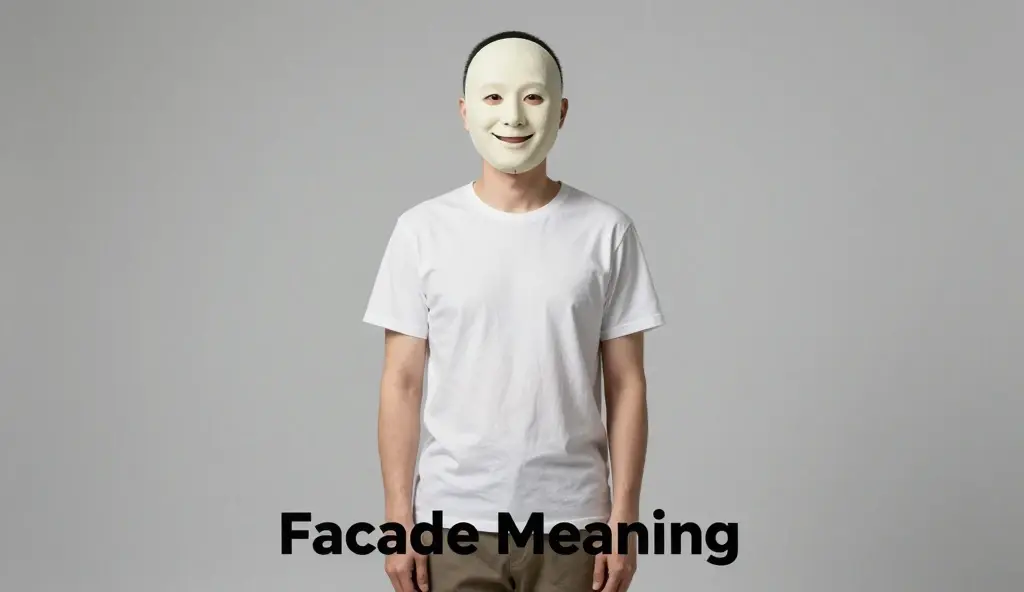
It can also mean a person is hiding their true feelings and showing a different face to others.
For example, someone may look happy on the outside but feel sad inside.
People use the word facade when talking about buildings, feelings, and everyday life.
Learning this word helps us understand what people show on the outside and what they may feel on the inside.
What Does Facade Mean?
A facade has two primary meanings:
1. Architectural Meaning
A facade is the front or face of a building, especially the side that faces a street or public area.
2. Figurative Meaning
A facade is an outward appearance that hides a person’s true feelings, emotions, character, or intentions.
Quick Answer: Facade Meaning
For readers looking for a simple definition:
Facade means an outward appearance that is maintained to hide the truth, or the front exterior of a building.
In everyday conversation, facade usually refers to someone pretending everything is fine when reality is different.
How Do You Pronounce Facade?
The correct pronunciation is:
fuh-SAHD
Phonetic spelling:
fə-ˈsäd
The word comes from French, which explains its unique spelling and pronunciation.
Facade Meaning in Simple Terms
In simple language, a facade is:
“A mask or appearance that hides what’s really going on.”
For example:
Someone may appear happy at work while secretly struggling with stress.
Their cheerful behavior could be described as a facade.
The Origin of the Word Facade
The word facade comes from the French word:
façade
Which means:
“Front face of a building.”
The term ultimately traces back to Latin roots relating to “face” or “appearance.”
Over time, English speakers adopted both the architectural and metaphorical meanings.
Facade Meaning in Architecture
In architecture, a facade refers to the exterior front of a building.
Examples include:
- Historic landmarks
- Government buildings
- Museums
- Churches
- Office towers
Architects often design facades to create a strong first impression.
Why Building Facades Matter
The facade is often the most visible part of a structure.
It influences:
- Aesthetic appeal
- Property value
- Brand image
- Architectural identity
Many famous buildings are recognized primarily by their facades.
Facade Meaning in Psychology
Psychologically, a facade refers to a false outward presentation.
People sometimes create facades to:
- Avoid judgment
- Protect themselves emotionally
- Maintain social acceptance
- Hide vulnerability
- Appear successful
This use of the word is extremely common today.
Why People Create a Facade
There are many reasons someone may maintain a facade.
Fear of Rejection
People often hide their true feelings to avoid criticism.
Professional Expectations
Workplace culture may encourage individuals to appear confident at all times.
Social Pressure
Social media often promotes idealized lifestyles.
Emotional Protection
Some people use facades as a coping mechanism during difficult times.
Facade Meaning in Relationships
Relationships frequently involve discussions about authenticity and facades.
Examples include:
- Pretending to be happy
- Hiding concerns
- Concealing emotions
- Acting differently to please others
Healthy relationships often require moving beyond facades.
Facade Meaning in Social Media
Social media has increased discussions about facades.
Many people present carefully curated versions of their lives.
Examples include:
- Highlighting successes
- Hiding struggles
- Sharing only positive moments
This can create a digital facade that differs from reality.
Facade Meaning in Business
Businesses sometimes use facades as well.
Examples include:
- Presenting a stronger image than reality
- Hiding internal challenges
- Maintaining public confidence
Companies often work hard to protect their reputation and brand image.
Facade Meaning in Literature
Writers frequently use facades as literary devices.
Characters may:
- Hide secrets
- Conceal motives
- Pretend to be someone else
This creates tension and drives storytelling.
Examples of Facade in Sentences
Personal Life
She maintained a facade of confidence despite feeling nervous.
Workplace
The company projected a facade of stability during difficult financial times.
Relationships
His cheerful attitude was only a facade.
Architecture
The building’s facade was restored after years of damage.
Facade vs Mask
Many people compare facade and mask.
Mask
Usually refers to a temporary disguise.
Facade
Often describes a longer-term appearance maintained over time.
Both involve hiding reality, but facade typically suggests a more sustained effort.
Facade vs Appearance
Appearance
Simply how something looks.
Facade
An appearance that intentionally hides the truth.
This distinction is important.
Not every appearance is a facade.
Signs Someone May Be Maintaining a Facade
While it’s impossible to know for certain, some signs may include:
- Constant positivity despite difficulties
- Avoiding emotional conversations
- Inconsistent behavior
- Excessive focus on image
- Reluctance to show vulnerability
These signs don’t guarantee a facade but may indicate one.
The Emotional Cost of Living Behind a Facade
Maintaining a facade can be exhausting.
Potential consequences include:
- Stress
- Anxiety
- Emotional fatigue
- Isolation
- Reduced authenticity
Mental health professionals often emphasize the importance of genuine self-expression.
Benefits of Authenticity
Being authentic can provide:
- Stronger relationships
- Better communication
- Increased self-confidence
- Emotional well-being
- Greater trust
Authenticity often reduces the need for a facade.
Facade in Popular Culture
Movies, television, and books frequently explore the theme of facade.
Common storylines include:
- Hidden identities
- Secret lives
- Double personalities
- Public image versus reality
These themes resonate because they reflect real human experiences.
Common Misunderstandings About Facades
Myth 1: Every Facade Is Dishonest
Some facades develop as protective mechanisms rather than intentional deception.
Myth 2: Only Individuals Have Facades
Organizations, businesses, and institutions can also maintain facades.
Myth 3: Facades Are Always Negative
In some situations, maintaining composure can be temporarily helpful.
Myth 4: Everyone Can Easily Detect a Facade
Many facades are extremely convincing.
Expert Tips for Recognizing Authenticity
Pay Attention to Consistency
Authentic behavior tends to remain consistent.
Look Beyond Appearances
Surface impressions don’t always reveal the full story.
Encourage Honest Communication
People are more likely to drop facades when they feel safe.
Avoid Quick Judgments
Everyone experiences challenges differently.
Practice Self-Awareness
Understanding your own behaviors can improve authenticity.
FAQs:
Q1. What does facade mean?
A: Facade means either the front of a building or an outward appearance that hides the truth.
Q2. How do you pronounce facade?
A: It is pronounced “fuh-SAHD.”
Q3. Is facade a positive or negative word?
A: It can be either, depending on the context.
Q4. What is a facade in psychology?
A: A facade is a false outward appearance used to hide genuine emotions or thoughts.
Q5. What is a facade in architecture?
A: The exterior front face of a building.
Q6. Why do people create facades?
A: To protect themselves, avoid judgment, or maintain social acceptance.
Q7. Is a facade the same as lying?
A: Not necessarily. A facade may involve hiding information rather than directly lying.
Q8. What does “putting up a facade” mean?
A: It means pretending to be different from how you truly feel.
Q9. Can businesses have facades?
A: Yes. Companies sometimes maintain public images that differ from internal realities.
Q10. Is facade a French word?
A: Yes. It originates from the French word “façade.”
Q11. What is the difference between facade and mask?
A: A mask is often temporary, while a facade is usually maintained over a longer period.
Q12. Can social media create facades?
A: Yes. Many people present idealized versions of their lives online.
Q13. Is authenticity the opposite of facade?
A: In many contexts, yes.
Q14. Why is facade important in literature?
A: It helps create character depth, tension, and conflict.
Q15. Can a facade affect mental health?
A: Yes. Constantly maintaining a facade may contribute to emotional stress and exhaustion.
Conclusion:
The facade meaning extends far beyond architecture.
While it originally referred to the front of a building, the term now plays an important role in discussions about psychology, relationships, business, literature, and modern social media culture.
A facade can be a physical structure, but more often, it describes an outward appearance that hides deeper truths.
Understanding facades helps us recognize the difference between appearance and reality.
If discussing personal growth, communication, or emotional well-being, the concept reminds us that what we see on the surface isn’t always the complete story.
In a world increasingly focused on image and presentation, authenticity remains one of the most valuable alternatives to living behind a facade.

Logan is a professional blogger and researcher passionate about internet culture, digital language trends, and modern communication meanings.