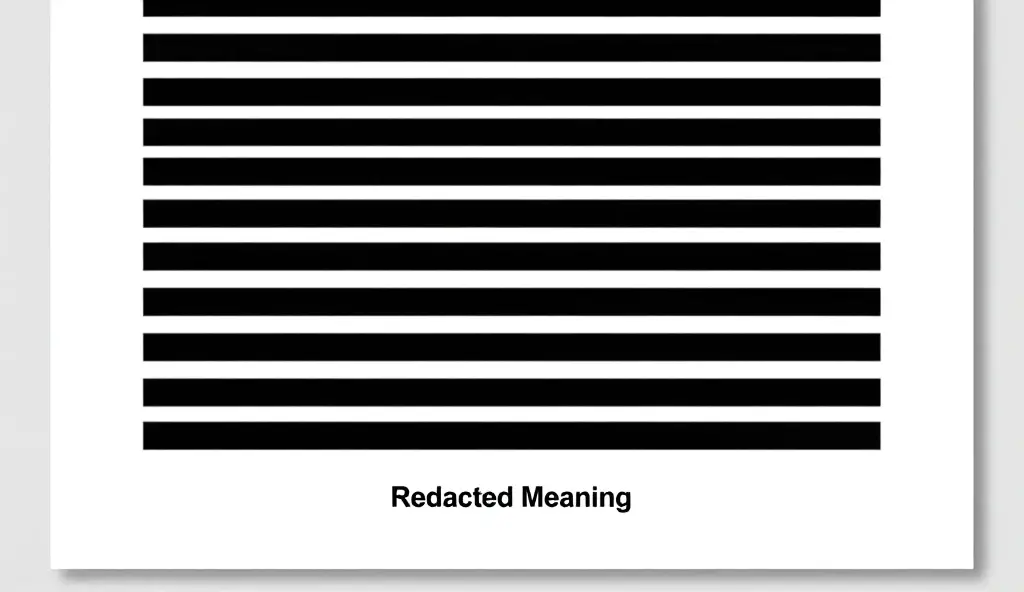
The word “redacted” means some words or information are hidden in a document.
This is often done by covering the words with black lines or boxes.
People do this to keep private or secret information safe.
Redaction is used in important papers like government records, police reports, and legal documents.
It helps protect privacy and keeps sensitive information secure.
What Does Redacted Mean?
The word redacted means:
Information has been removed, hidden, obscured, or blacked out from a document before it is shared or published.
The purpose of redaction is usually to protect sensitive, confidential, private, or legally restricted information.
Quick Answer: Redacted Meaning
For readers seeking a quick definition:
Redacted means that certain information has been intentionally removed or hidden from a document, report, image, or record before it is released to the public or shared with others.
What Does “Redacted” Mean in Simple Terms?
In everyday language, redacted means:
“Some information was removed because people are not allowed to see it.”
For example:
Original text:
John Smith lives at 123 Main Street.
Redacted version:
John Smith lives at ███████████.
The address has been hidden to protect privacy.
What Is Redaction?
Redaction is the process of removing sensitive information from a document before distribution.
The information may be:
- Deleted
- Blacked out
- Masked
- Hidden
- Obscured
The goal is to allow the document to be shared while protecting certain details.
Why Is Information Redacted?
There are many reasons why information may be redacted.
Common reasons include:
- Protecting personal privacy
- National security concerns
- Legal requirements
- Confidential business information
- Medical privacy laws
- Ongoing investigations
- Trade secrets
Redaction helps balance transparency and confidentiality.
Types of Information Commonly Redacted
Several categories of information are frequently removed from public documents.
Personal Information
Examples include:
- Social Security numbers
- National identification numbers
- Home addresses
- Phone numbers
- Email addresses
Financial Information
Examples include:
- Bank account numbers
- Credit card information
- Tax records
Medical Information
Examples include:
- Patient records
- Medical diagnoses
- Treatment details
Healthcare privacy laws often require redaction.
Government Secrets
Examples include:
- Intelligence sources
- Military operations
- Classified information
These redactions protect national security.
Business Confidential Information
Examples include:
- Proprietary formulas
- Trade secrets
- Internal strategies
- Confidential contracts
Redacted Meaning in Legal Documents
Legal documents frequently contain redacted information.
Common examples include:
- Court records
- Lawsuits
- Settlement agreements
- Witness statements
Redaction helps protect:
- Minors
- Victims
- Witnesses
- Sensitive evidence
Redacted Meaning in Government Documents
Government agencies often release documents with redactions.
Examples include:
- Intelligence reports
- Investigation files
- National security records
- Freedom of Information Act (FOIA) releases
Certain details may remain hidden to protect public interests.
Redacted Meaning in News Reports
Journalists often reference redacted documents.
You may hear statements such as:
“The report was released with several sections redacted.”
This means portions of the report were removed before publication.
News organizations frequently analyze redacted documents to understand what information remains hidden.
Redacted Meaning in Police Reports
Police reports sometimes contain redacted sections.
Information may be hidden to protect:
- Victims
- Witnesses
- Informants
- Ongoing investigations
This helps maintain safety and investigative integrity.
Redacted Meaning in Court Cases
Courts often order redactions when documents contain:
- Sensitive evidence
- Personal information
- Protected identities
- Confidential agreements
Judges balance public access with privacy concerns.
How Does Redaction Work?
The redaction process generally follows these steps:
Step 1: Review the Document
Officials identify sensitive information.
Step 2: Mark Information for Removal
Specific text or images are selected.
Step 3: Apply Redactions
Information is permanently removed or obscured.
Step 4: Publish the Redacted Version
The remaining content becomes available for sharing.
What Do Redacted Documents Look Like?
Most redacted documents contain:
██████████████
or
[REDACTED]
These markers indicate removed information.
Redacted vs Edited
Many people confuse redaction with editing.
Editing
Changes content for clarity, grammar, or style.
Redaction
Removes information for privacy, security, or legal reasons.
The purposes are completely different.
Redacted vs Classified
These terms are related but not identical.
Classified
Information is officially restricted.
Redacted
Information is removed from a document before release.
Classified information often becomes redacted when documents are made public.
Digital Redaction
Modern redaction frequently occurs electronically.
Software can remove:
- Text
- Images
- Metadata
- Hidden information
Proper digital redaction is important because improperly hidden information can sometimes be recovered.
Common Redaction Mistakes
Some organizations make mistakes when redacting documents.
Examples include:
Covering Instead of Removing
Black boxes may hide text visually but leave data accessible.
Forgetting Metadata
Sensitive information may remain hidden in document properties.
Partial Redaction
Incomplete removal may reveal confidential details.
Proper redaction requires specialized tools.
Famous Examples of Redacted Documents
Throughout history, many high-profile documents have been released with redactions.
Examples include:
- Government investigations
- Intelligence reports
- Court filings
- National security documents
These releases often generate public curiosity about the hidden content.
Why Do People Search for Redacted Information?
Human curiosity plays a major role.
People naturally wonder:
- What was removed?
- Why was it hidden?
- Who requested the redaction?
- Is the information important?
The mystery surrounding redacted content often attracts attention.
Is Redaction Legal?
Yes.
In many situations, redaction is legally required.
Examples include:
- Privacy laws
- Medical confidentiality rules
- Child protection laws
- National security regulations
Failure to redact sensitive information can result in legal consequences.
Industries That Frequently Use Redaction
Many industries rely on redaction.
Healthcare
Patient privacy protection.
Government
Security and public disclosure compliance.
Legal Services
Protecting confidential case information.
Financial Institutions
Safeguarding customer data.
Human Resources
Protecting employee records.
Benefits of Redaction
Redaction provides several important advantages.
Protects Privacy
Prevents exposure of personal information.
Supports Transparency
Allows documents to be shared safely.
Reduces Risk
Minimizes identity theft and data breaches.
Meets Legal Requirements
Helps organizations comply with regulations.
Common Misunderstandings About Redacted Information
Myth 1: Redacted Means Deleted Forever
Sometimes the original version still exists securely elsewhere.
Myth 2: Redacted Information Is Always Secret
Some redactions simply protect privacy.
Myth 3: Every Redaction Hides Something Major
Many redactions involve routine personal information.
Myth 4: Redacted Documents Are Useless
Most still contain valuable information.
Expert Tips for Handling Redacted Documents
Use Proper Software
Professional tools ensure permanent removal.
Verify Redactions
Always check that information cannot be recovered.
Remove Metadata
Protect hidden document information.
Follow Legal Requirements
Understand applicable privacy regulations.
Maintain Secure Records
Keep original documents protected.
FAQs
Q1. What does redacted mean?
A: Redacted means information has been removed or hidden from a document before it is shared.
Q2. Why is information redacted?
A: To protect privacy, security, confidentiality, or comply with legal requirements.
Q3. What does [REDACTED] mean?
A: It shows that information has been intentionally removed.
Q4. Is redacted information classified?
A: Not always. Some redactions are just to protect personal data.
Q5. Can redacted text be recovered?
A: Properly redacted information should not be recoverable.
Q6. What does redacted mean in court documents?
A: Sensitive information has been removed before public release.
Q7. Why do government reports contain redactions?
A: To protect classified information, investigations, or privacy.
Q8. What is digital redaction?
A: The electronic removal of sensitive information from digital files.
Q9. Is redaction permanent?
A: When done correctly, yes.
Q10. What types of information are commonly redacted?
A: Personal, financial, medical, legal, and classified details.
Q11. Is redaction required by law?
A: In many cases, yes.
Q12. What does redacted mean in police reports?
A: Certain details are hidden to protect privacy or ongoing investigations.
Q13. What is the difference between redacted and edited?
A: Editing changes content; redaction removes sensitive information.
Q14. Why do journalists discuss redacted documents?
A: Because hidden information can affect public understanding of events.
Q15. Are redacted documents still useful?
A: Yes, they often still contain valuable information.
Conclusion:
The word “redacted” means some information is hidden or removed from a document.
This is done to keep private or secret information safe.
For example, in some papers, names or details may be blacked out so people cannot see them.
Redaction is used in government work, medical files, and other important documents.
It helps protect people’s privacy and keeps important information safe.

James is an experienced SEO content creator who writes about trending meanings, cultural phrases, and educational topics with clarity and accuracy.