
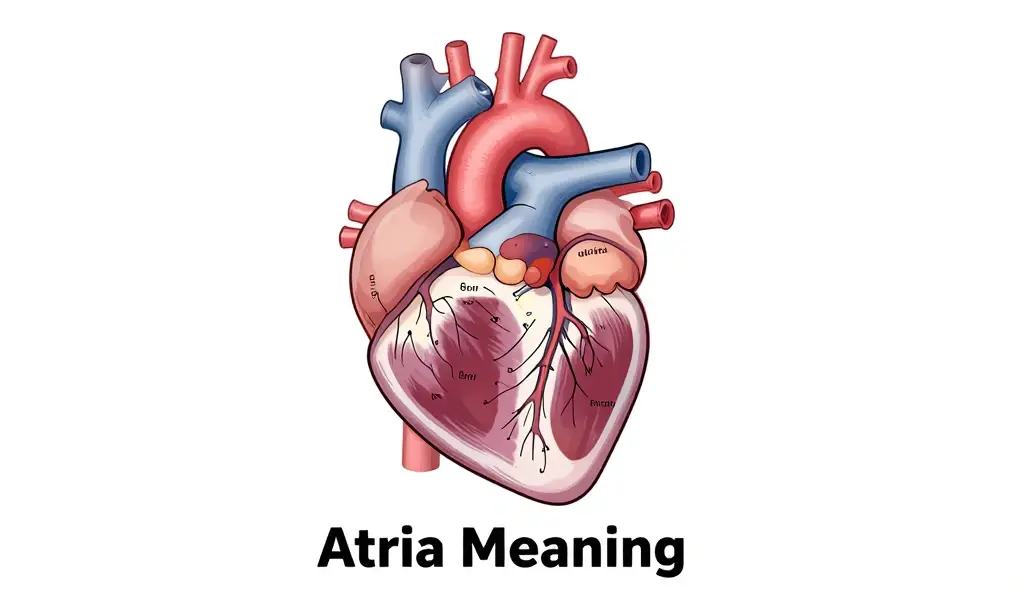
The term atria appears in several fields, including anatomy, architecture, biology, and medicine.
Because it has multiple meanings, many people search for “atria meaning” to understand how the word is used in different contexts.
Most commonly, atria is the plural form of atrium, referring to the two upper chambers of the human heart.
However, the word can also describe a large open central space inside a building.
Understanding the context is essential because the meaning changes depending on the subject being discussed.
This guide explains the complete meaning of atria, its origin, medical significance, architectural use, examples, and frequently asked questions.
What Does Atria Mean?
Atria is the plural form of atrium.
Simple Definition
Atria are the upper chambers of the heart that receive blood before it moves into the lower chambers (ventricles).
In architecture:
Atria are large open central areas inside buildings, often covered by glass roofs or surrounded by multiple floors.
Atria Meaning in Anatomy
In human anatomy, the heart contains:
- Two atria (upper chambers)
- Two ventricles (lower chambers)
The atria receive blood returning to the heart and pass it to the ventricles, which then pump it throughout the body.
The Two Atria
Right Atrium
The right atrium receives oxygen-poor blood returning from the body.
Left Atrium
The left atrium receives oxygen-rich blood returning from the lungs.
Together, these chambers help maintain efficient blood circulation.
Function of the Atria
The atria play a critical role in the cardiovascular system.
Their primary functions include:
Receiving Blood
The atria act as collection chambers.
Moving Blood to the Ventricles
They contract and push blood into the lower chambers.
Supporting Heart Efficiency
Proper atrial function helps maintain a healthy heartbeat and circulation.
Without the atria, the heart could not effectively move blood through the body.
Atria in Medical Terminology
Healthcare professionals frequently use the word atria when discussing:
- Heart anatomy
- Cardiology
- Blood circulation
- Heart diseases
- Medical imaging
Common Medical Terms
Atrial Fibrillation
A common heart rhythm disorder affecting the atria.
Atrial Fibrillation
Atrial Septum
The wall separating the right and left atria.
Enlarged Atria
A condition where one or both atria become larger than normal.
Atria Meaning in Architecture
Outside medicine, atria refers to the plural of atrium, an open interior space in a building.
Architectural Definition
Atria are large central halls or open spaces that connect multiple floors within a structure.
These spaces often feature:
- Natural lighting
- Glass ceilings
- Open designs
- Decorative landscaping
Examples of Architectural Atria
Many modern buildings include atria, such as:
- Hotels
- Shopping malls
- Office towers
- Airports
- Museums
Example
A luxury hotel may have a five-story atrium with glass elevators and indoor gardens.
The purpose is often to create openness, improve lighting, and enhance aesthetics.
Origin of the Word Atria
The word comes from the Latin term:
Atrium
In ancient Roman houses, an atrium was the central open courtyard around which rooms were arranged.
Over time, the term expanded into both architecture and anatomy.
Scientists later adopted “atrium” to describe the heart’s upper receiving chambers because of their role as entry spaces.
Atria vs Atrium
Many people confuse these forms.
Atrium
Singular form.
Example:
The building has a beautiful atrium.
Atria
Plural form.
Example:
The hospital’s atria allow natural sunlight into the interior.
Similarly:
- One heart chamber = atrium
- Two heart chambers = atria
Atria in Biology
In biological systems, atrium-like structures can be found in certain animals.
Scientists use the term to describe receiving chambers that collect fluids before they move elsewhere.
This usage is especially common in comparative anatomy studies.
Common Examples of Atria
Medical Example
The atria receive blood before it enters the ventricles.
Architecture Example
The office complex contains multiple glass-covered atria.
Educational Example
Students learned how the atria function within the circulatory system.
Why Are the Atria Important?
The atria are essential because they:
- Receive incoming blood
- Help regulate blood flow
- Support efficient heart function
- Maintain circulation
- Coordinate with the ventricles
When atrial function is impaired, serious cardiovascular issues may develop.
Common Conditions Affecting the Atria
Several medical conditions involve the atria.
Atrial Fibrillation
An irregular heartbeat originating in the atria.
Atrial Flutter
A rapid heart rhythm disorder.
Enlarged Atria
Can result from long-term heart stress or disease.
Atrial Septal Defect
A hole in the wall separating the atria.
These conditions often require evaluation by healthcare professionals.
Synonyms and Related Terms
Medical Context
- Heart chambers
- Upper cardiac chambers
- Cardiac atria
Architectural Context
- Central hall
- Open court
- Interior courtyard
- Open lobby
Common Mistakes About Atria
Thinking Atria Is Singular
False.
Atria is plural.
Atrium is singular.
Assuming It Only Refers to Buildings
False.
The medical meaning is actually more common.
Confusing Atria with Ventricles
The atria are upper chambers.
The ventricles are lower chambers.
Using Atrium and Atria Interchangeably
One is singular and the other is plural.
Example Sentences
- The atria receive blood returning to the heart.
- Doctors examined the patient’s atria using imaging tests.
- The museum features several impressive atria.
- Healthy atria contribute to efficient circulation.
- The architect designed multiple glass-covered atria.
Expert Insight
Medical experts consider the atria critical components of the heart’s pumping system. Meanwhile, architects view atria as valuable design elements that create openness, natural lighting, and visual appeal. Despite these different applications, both meanings share a common concept: a receiving or central space that connects and directs movement.
FAQs
Q1. What does atria mean?
A: Atria is the plural form of atrium and usually refers to the two upper chambers of the heart.
Q2. What are the atria in the heart?
A: The right and left upper chambers that receive blood entering the heart.
Q3. Is atria singular or plural?
A: Atria is plural. Atrium is singular.
Q4. What is the function of the atria?
A: They receive blood and pass it to the ventricles.
Q5. How many atria does the human heart have?
A: Two: the right atrium and the left atrium.
Q6. What does atria mean in architecture?
A: Large open interior spaces within buildings.
Q7. What is an atrium?
A: The singular form of atria.
Q8. What is atrial fibrillation?
A: An irregular heart rhythm affecting the atria.
Q9. Why are the atria important?
A: They help maintain proper blood circulation.
Q10. Can atria become enlarged?
A: Yes. Certain heart conditions can cause enlargement.
Q11. What is the difference between atria and ventricles?
A: Atria are the upper chambers of the heart, while ventricles are the lower chambers.
Q12. Where does the word atria come from?
A: It comes from the Latin word “atrium.”
Q13. Do buildings have atria?
A: Yes. Many hotels, malls, and office buildings include atria.
Q14. Is atria a medical term?
A: Yes. It is commonly used in cardiology and anatomy.
Q15. What is the plural of atrium?
A : Atria.
Conclusion:
The atria meaning depends on context, but it most commonly refers to the two upper chambers of the heart that receive blood and help maintain circulation.
In architecture, atria are large open interior spaces designed to bring light and openness into buildings.
If used in medicine or design, the term originates from the Latin word atrium and continues to play an important role in both scientific and architectural discussions.

Logan is a professional blogger and researcher passionate about internet culture, digital language trends, and modern communication meanings.