
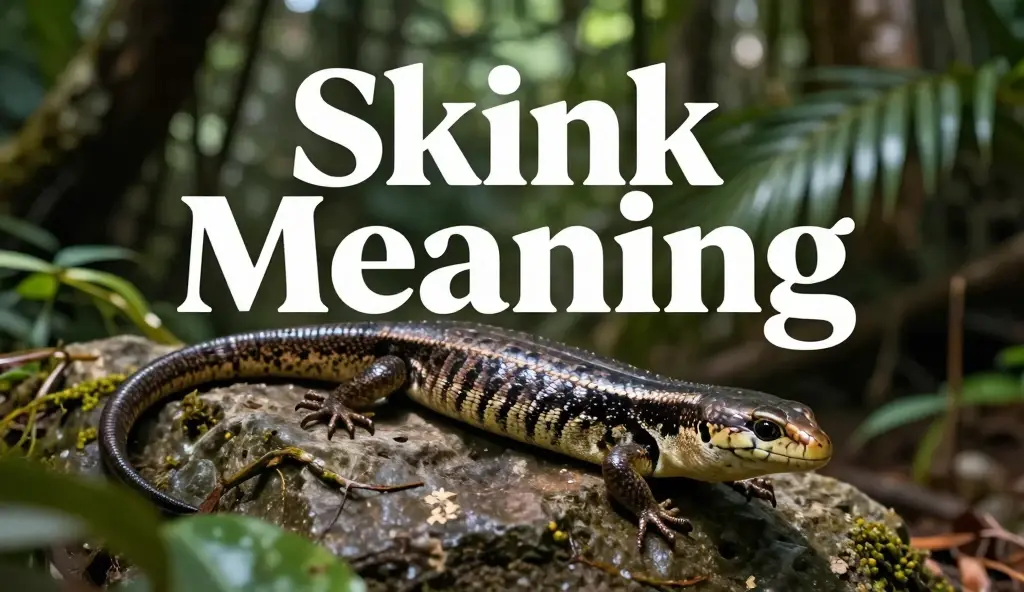
The word skink can refer to both a fascinating group of reptiles and, in some contexts, a slang or regional expression.
Most commonly, however, people searching for the exact skink meaning are trying to understand:
- What a skink is
- Whether it’s a lizard
- Where skinks live
- If skinks are dangerous
- Why skinks appear in homes or gardens
- Different types of skinks
Skinks are among the most widespread and adaptable lizards in the world.
They exist across:
- North America
- Africa
- Asia
- Australia
- Europe
- Tropical islands
These reptiles are known for:
- Smooth shiny scales
- Long slender bodies
- Quick movement
- Burrowing behavior
Some species are tiny and harmless, while others grow surprisingly large.
In internet culture and regional slang, “skink” may occasionally appear with alternative meanings, but biologically the word overwhelmingly refers to:
A family of lizards called Scincidae.
In this complete guide, you’ll learn:
- The exact skink meaning
- Scientific definition
- Types of skinks
- Habitat and behavior
- Are skinks dangerous?
- Blue-tailed skinks explained
- Skink symbolism and slang
- Differences between skinks and other lizards
- FAQs people search online daily
This guide explains both the biological and cultural meaning of skink in a clear, beginner-friendly way.
What Does Skink Mean?
A skink is:
A type of lizard belonging to the family Scincidae.
Skinks are reptiles known for:
- Smooth scales
- Cylindrical bodies
- Small legs
- Fast movement
Simple Definition of Skink
In plain English:
A skink is a small to medium-sized lizard found in many parts of the world.
Quick Definition Table
| Word | Meaning |
| Skink | A type of lizard |
Scientific Classification of Skinks
Skinks belong to:
The family Scincidae
This is one of the largest lizard families on Earth.
Scientists have identified:
More than 1,500 species of skinks worldwide.
What Do Skinks Look Like?
Most skinks have:
- Smooth shiny scales
- Long bodies
- Short legs
- Pointed heads
- Flexible tails
Some species resemble snakes because their legs are very small.
Why Skinks Look Shiny
Unlike rough-scaled reptiles, skinks have:
- Smooth overlapping scales
- Reflective skin texture
This gives them a glossy appearance.
Where Do Skinks Live?
Skinks live in many environments, including:
- Forests
- Grasslands
- Deserts
- Tropical regions
- Gardens
- Urban areas
Global Distribution of Skinks
Skinks are especially common in:
- Australia
- Southeast Asia
- Africa
- Southern United States
Are Skinks Dangerous?
Most skinks are:
Harmless to humans.
They are generally:
- Non-aggressive
- Shy
- Fast-moving
Skinks usually avoid people whenever possible.
Do Skinks Bite?
Skinks can bite if threatened, but:
- Bites are usually mild
- Most species are harmless
- They rarely attack humans
Are Skinks Poisonous?
No.
Skinks are not venomous or poisonous.
What Do Skinks Eat?
Most skinks eat:
- Insects
- Spiders
- Worms
- Small invertebrates
Some larger species may eat:
- Fruits
- Plants
- Smaller animals
Why Skinks Are Helpful
Skinks help ecosystems by controlling:
- Insect populations
- Garden pests
- Small harmful bugs
That’s why gardeners often appreciate them.
Blue-Tailed Skink Meaning
One of the most recognizable skinks is the:
Blue-tailed skink
Young skinks often have bright blue tails.
Why Some Skinks Have Blue Tails
The blue tail acts as:
A defense mechanism.
Predators focus on the bright tail instead of the skink’s body.
Some skinks can even:
Detach their tails to escape predators.
Can Skinks Regrow Their Tails?
Yes.
Many skinks can regenerate lost tails over time.
Why Skinks Move So Fast
Skinks evolved to:
- Escape predators quickly
- Navigate tight spaces
- Burrow efficiently
Their smooth bodies reduce friction while moving.
Skinks vs Lizards
A skink is:
A type of lizard.
Not all lizards are skinks.
Skink vs Gecko
| Skink | Gecko |
| Smooth scales | Sticky toe pads |
| Sleek body | Larger eyes |
| Fast ground movement | Excellent climbers |
Skink vs Snake
Some legless skinks resemble snakes.
However, skinks still differ because they usually:
- Have eyelids
- Have ear openings
- Retain lizard anatomy
Common Types of Skinks
Popular species include:
- Blue-tongued skink
- Five-lined skink
- Fire skink
- Solomon Islands skink
Blue-Tongued Skink
Blue-tongued skink is famous for:
- Large size
- Bright blue tongue
- Calm temperament
These are popular pet reptiles.
Five-Lined Skink
Five-lined skink is common in the United States and known for:
- Blue tails in juveniles
- Fast movement
- Tree climbing
Are Skinks Good Pets?
Some skink species make excellent pets because they can be:
- Calm
- Intelligent
- Hardy
- Easy to handle
However, they still require:
- Proper heating
- UV lighting
- Correct diet
- Habitat care
Why People Like Pet Skinks
Skinks are often appreciated for:
- Unique appearance
- Curious behavior
- Relatively calm personalities
Skinks in Gardens
Homeowners often find skinks:
- Under rocks
- Near plants
- Around patios
- In warm sunny areas
This is normal in many climates.
Are Skinks Good for Gardens?
Yes.
Skinks naturally reduce pest insects, making them beneficial for gardens.
Why Skinks Hide Frequently
Skinks are prey animals.
They hide to avoid:
- Birds
- Cats
- Snakes
- Larger predators
Do Skinks Hibernate?
Some species enter:
Brumation
which is similar to reptile hibernation during cold weather.
Skink Symbolism
In some cultures, lizards including skinks symbolize:
- Adaptability
- Survival
- Regeneration
- Awareness
Especially because of their ability to regrow tails.
Slang Meaning of Skink
In some regional or historical slang contexts, “skink” has occasionally been used differently.
However, these uses are much less common today than the reptile meaning.
Most modern searches refer to the animal.
Why Skinks Fascinate Scientists
Researchers study skinks because of:
- Tail regeneration
- Evolution
- Limb reduction
- Adaptation
Some species evolved reduced or missing limbs over millions of years.
Why Australia Has So Many Skinks
Australia contains enormous skink diversity because:
- Reptiles thrive in warm climates
- Geographic isolation encouraged evolution
- Many ecological niches exist
Real-Life Examples of Skink Usage
Example 1: Nature Discussion
“I saw a skink in the garden.”
Meaning:
A small lizard.
Example 2: Pet Reptile Context
“Blue-tongued skinks are popular pets.”
Example 3: Wildlife Observation
“The skink ran under the rock.”
Common Misunderstandings About Skinks
Mistake 1: Thinking Skinks Are Snakes
Skinks are lizards, not snakes.
Mistake 2: Believing Skinks Are Dangerous
Most species are harmless to humans.
Mistake 3: Assuming All Skinks Look the Same
There are over 1,500 species with major differences.
Why People Search “Skink Meaning”
People search the term because:
- They saw a lizard
- They encountered the word online
- They heard the term in biology
- They want reptile identification
Long-Tail Keywords Related to Skink Meaning
People also search:
- What is a skink?
- Skink meaning lizard
- Are skinks dangerous?
- Blue-tailed skink meaning
- Skink reptile definition
- Types of skinks
- Pet skink guide
- Skink vs gecko
- What do skinks eat?
Semantic SEO Topics Related to Skink
Closely related entities include:
- Lizards
- Reptiles
- Geckos
- Blue-tongued skinks
- Reptile pets
- Wildlife biology
- Tail regeneration
- Garden reptiles
Short Voice Search Answer
A skink is a small lizard with smooth scales found in many parts of the world.
FAQs
1. What is a skink?
A: A skink is a type of lizard from the family Scincidae.
2. Are skinks dangerous?
A: No. Most skinks are harmless to humans.
3. Is a skink a snake?
A: No. Skinks are lizards.
4. What do skinks eat?
A: Mostly insects, spiders, worms, and small invertebrates.
5. Can skinks bite?
A: Yes, but bites are usually harmless.
6. Why do some skinks have blue tails?
A: Blue tails help distract predators.
7. Can skinks regrow their tails?
A: Yes. Many species regenerate lost tails.
8. Are skinks good pets?
A: Some species make excellent reptile pets.
9. Where do skinks live?
A: They live worldwide in forests, deserts, gardens, and grasslands.
10. What’s the difference between a skink and a gecko?
A: Geckos usually have sticky toe pads, while skinks have smooth scales and ground-focused movement.
11. Are skinks poisonous?
A: No. Skinks are not venomous.
12. Why do skinks hide?
A: They hide to avoid predators.
13. What is a blue-tongued skink?
A: Blue-tongued skink is a large skink species known for its bright blue tongue.
14. Are skinks helpful in gardens?
A: Yes. They eat pest insects.
15. How many skink species exist?
A: Scientists recognize more than 1,500 species worldwide.
Conclusion:
The skink meaning primarily refers to:
A diverse family of lizards known as Scincidae.
These reptiles are recognized for:
- Smooth shiny scales
- Fast movement
- Long flexible bodies
- Adaptability
Found across much of the world, skinks play important roles in ecosystems by controlling insects and contributing to biodiversity.
Although the word occasionally appears in slang or regional language, the reptile meaning overwhelmingly dominates modern usage.
Understanding skinks helps explain:
- Reptile biology
- Evolution
- Wildlife diversity
- Pet reptile culture
- Ecosystem balance
Whether encountered in a garden, science class, reptile documentary, or online discussion, skinks remain one of the most widespread and fascinating groups of lizards on Earth.

Natalie is known for creating informative and inspiring articles about names, relationships, emotions, and motivational meanings for modern audiences.