
Some words perfectly capture experiences that feel strange, dreamlike, or almost impossible to believe.
One of the most powerful words for that feeling is surreal.
People often say things like:
- “Winning the championship felt surreal.”
- “The view looked surreal.”
- “It was such a surreal experience.”
- “The movie had a surreal atmosphere.”
But what exactly does surreal meaning involve? Does it always relate to dreams and art, or can it describe real-life moments too?
Today, the word appears everywhere:
- social media
- movies
- psychology
- literature
- art
- travel
- emotional storytelling
- everyday conversation
Understanding surreal meaning helps explain not only language but also how humans process extraordinary experiences, emotions, imagination, and reality itself.
This complete guide explores everything about surreal meaning, including definitions, pronunciation, origins, psychology, art history, examples, modern slang usage, emotional context, and why the word became so popular worldwide.
What Does Surreal Mean?
Surreal Meaning Explained
Surreal means:
Strange, dreamlike, unreal, or difficult to believe.
The word describes something that feels:
- beyond normal reality
- oddly beautiful
- bizarre
- emotionally overwhelming
- almost like a dream
Surreal experiences often create a feeling of:
“This doesn’t feel real.”
Simple Definition of Surreal
Short Definition
Surreal means:
So unusual or extraordinary that it feels unreal or dreamlike.
Pronunciation of Surreal
Surreal is pronounced:
suh-REE-ul
Phonetic spelling:
/səˈriː.əl/
Why the Word Surreal Feels So Powerful
Unlike words such as:
- strange
- weird
- unusual
surreal carries emotional depth.
It suggests:
- altered reality
- emotional intensity
- dreamlike atmosphere
- psychological impact
That’s why people use it for unforgettable experiences.
The Origin of the Word Surreal
The word comes from:
Surrealism
an influential artistic and literary movement from the early 20th century.
The term combines:
- sur (“beyond” in French)
- real
Meaning:
“Beyond reality.”
Over time, “surreal” evolved into a broader everyday word.
What Is Surrealism?
Surrealism Explained
Surrealism was an art and cultural movement focused on:
- dreams
- imagination
- the subconscious mind
- irrational imagery
- fantasy
Surrealist artists tried to create works that felt:
- dreamlike
- impossible
- psychologically symbolic
Famous Surrealist Artists
Some of the most famous surrealist artists include:
- Salvador Dalí
- René Magritte
- Max Ernst
Their artwork helped define modern ideas of “surreal.”
Surreal Meaning in Everyday Life
Today, most people use surreal to describe experiences that feel:
- emotionally overwhelming
- unbelievable
- dreamlike
- hard to process
Example:
“Meeting my childhood hero felt surreal.”
The event actually happened, but emotionally it felt unreal.
Why Humans Describe Emotional Moments as Surreal
Major life events can temporarily overwhelm the brain.
Examples:
- weddings
- graduations
- viral fame
- accidents
- major achievements
- shocking news
The brain struggles to process intense emotion immediately, creating a “surreal” feeling.
Surreal Meaning in Psychology
Psychologically, surreal experiences often involve:
- emotional overload
- dissociation
- shock
- awe
- altered perception
During intense moments, reality may briefly feel dreamlike or distant.
Surreal vs Unreal
These words are related but not identical.
Unreal
Something literally false or impossible.
Example:
“Dragons are unreal.”
Surreal
Something feels strangely dreamlike or emotionally unreal.
Example:
“Winning the lottery felt surreal.”
The event is real — but emotionally unbelievable.
Surreal vs Weird
Weird
Simply unusual or strange.
Surreal
Strange in a dreamlike, emotionally intense, or artistic way.
Surreal usually carries more emotional and visual depth.
Examples of Surreal Experiences
People often describe these moments as surreal:
- seeing snow for the first time
- standing on a famous stage
- surviving an accident
- becoming famous overnight
- traveling to breathtaking places
- witnessing historic events
These experiences feel larger than ordinary reality.
Surreal Meaning in Movies
Films often use surreal imagery to create:
- dream sequences
- psychological tension
- emotional symbolism
- fantasy atmospheres
Surreal movies blur the line between:
- reality
- imagination
- memory
- dreams
Surreal Meaning in Literature
Writers use surreal elements to:
- symbolize emotions
- challenge logic
- create mystery
- explore the subconscious
Surreal storytelling often feels:
- symbolic
- imaginative
- emotionally intense
Surreal Landscapes and Nature
People commonly describe nature as surreal when it appears:
- unbelievably beautiful
- visually strange
- dreamlike
Examples:
- glowing northern lights
- desert landscapes
- crystal-clear water
- unusual sunsets
Why Social Media Loves the Word Surreal
Social media users frequently describe experiences as surreal because the word:
- sounds emotional
- feels cinematic
- communicates awe instantly
- captures disbelief
Examples:
- “This trip feels surreal.”
- “1 million followers… surreal.”
- “I can’t believe this happened.”
Surreal Meaning in Art
In art, surreal often refers to imagery that combines:
- reality
- fantasy
- symbolism
- impossible scenes
Examples include:
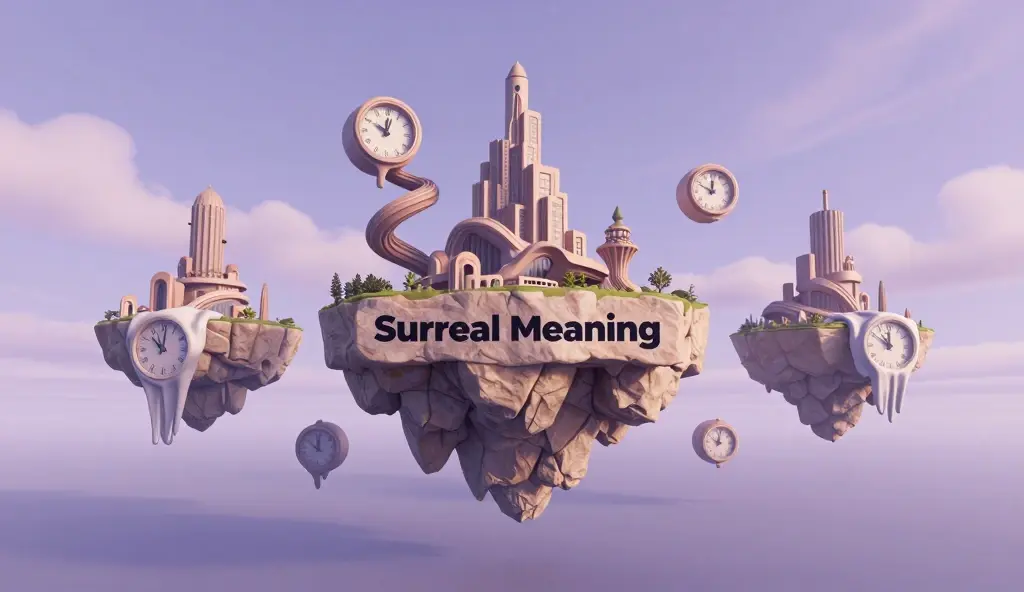
- melting clocks
- floating objects
- distorted spaces
- dreamlike environments
Surreal art intentionally challenges logic.
Why Dreams Feel Surreal
Dreams naturally feel surreal because they:
- ignore physical rules
- blend memories
- distort reality
- create impossible scenarios
That’s why “surreal” became strongly connected with dreamlike experiences.
Surreal Humor
Internet culture often uses surreal humor.
This style includes:
- randomness
- absurdity
- illogical situations
- bizarre edits
- unexpected imagery
Surreal memes intentionally feel confusing or dreamlike.
Surreal Meaning in Music
Musicians use “surreal” to describe:
- emotional performances
- psychedelic experiences
- overwhelming success
- atmospheric sounds
The word communicates emotional intensity and unreality simultaneously.
Why Beautiful Places Feel Surreal
Extraordinary beauty can overwhelm normal perception.
People often say:
“This place looks surreal.”
because the scenery feels:
- too beautiful to be real
- visually unbelievable
- dreamlike
Surreal Experiences After Major Success
Athletes, celebrities, and creators often describe achievements as surreal.
Examples:
- winning awards
- hearing crowds cheer
- becoming famous
- reaching lifelong goals
Success can temporarily feel psychologically unreal.
Surreal Meaning in Internet Slang
Online, surreal can also casually mean:
- extremely strange
- bizarrely funny
- oddly random
Example:
“That video was completely surreal.”
Internet culture expanded the word beyond art and psychology.
Surrealism and the Subconscious Mind
Surrealist thinkers believed:
- dreams reveal hidden desires
- the subconscious shapes creativity
- imagination can expose truth
Their ideas influenced:
- psychology
- cinema
- literature
- modern art
Famous Surreal Paintings
One iconic example is:
“The Persistence of Memory”
by Salvador Dalí.
The melting clocks became a global symbol of surrealism.
Why Surreal Experiences Feel Memorable
The brain remembers emotionally unusual moments more strongly.
Surreal experiences often combine:
- novelty
- emotion
- surprise
- sensory intensity
That combination creates lasting memories.
Surreal Meaning in Travel
Travelers frequently use surreal to describe:
- exotic destinations
- cultural shock
- extraordinary scenery
- once-in-a-lifetime experiences
Example:
“Seeing the pyramids in person felt surreal.”
How to Use Surreal in a Sentence
Example 1
“Graduation day felt surreal.”
Example 2
“The movie had surreal visuals.”
Example 3
“The silence after the storm was surreal.”
Example 4
“Meeting my favorite actor was surreal.”
Why the Word Became So Popular
Surreal became widely popular because modern life increasingly includes:
- digital experiences
- viral moments
- emotional overstimulation
- cinematic media
People need words that describe emotionally unreal experiences.
Surreal fits perfectly.
Surreal vs Magical
Magical
Feels enchanting or joyful.
Surreal
Feels dreamlike, unbelievable, or psychologically strange.
Some experiences can feel both magical and surreal simultaneously.
Expert Insight: Why Humans Love Surreal Experiences
Humans naturally seek:
- wonder
- novelty
- imagination
- emotional intensity
Surreal experiences temporarily break ordinary reality, which makes them exciting and memorable.
Common Misunderstandings About Surreal
Mistake #1: Thinking It Only Means Weird
Surreal is deeper and more dreamlike than ordinary weirdness.
Mistake #2: Assuming It Only Refers to Art
People commonly use surreal in everyday emotional situations.
Mistake #3: Thinking Surreal Means Fake
Something surreal can be completely real while still feeling unreal emotionally.
Synonyms for Surreal
Common synonyms include:
- dreamlike
- unreal
- bizarre
- fantastical
- strange
- otherworldly
- uncanny
Antonyms of Surreal
Opposite concepts include:
- ordinary
- realistic
- normal
- practical
- familiar
Why Writers Love the Word Surreal
The word instantly creates:
- emotional imagery
- mystery
- visual atmosphere
- psychological depth
Few words communicate dreamlike emotion so effectively.
Surreal in Pop Culture
Today, surreal appears constantly in:
- TikTok captions
- travel videos
- music interviews
- movie reviews
- memes
- emotional storytelling
The word remains highly relevant in modern communication.
FAQs
1. What does surreal mean?
A: Surreal means strange, dreamlike, or so extraordinary that it feels unreal.
2. Is surreal positive or negative?
A: It can be either depending on context. Surreal may describe beautiful, shocking, or unsettling experiences.
3. What’s an example of something surreal?
A: Seeing the Northern Lights for the first time might feel surreal because it looks almost unreal.
4. How do you pronounce surreal?
Surreal is pronounced:
“suh-REE-ul.”
5. Does surreal mean fake?
A: No. Something can be real but still feel surreal emotionally.
6. What is surrealism?
A: Surrealism was an art movement focused on dreams, imagination, and the subconscious mind.
7. What’s the difference between weird and surreal?
A: Weird means unusual, while surreal implies dreamlike or emotionally unreal qualities.
8. Why do people say experiences feel surreal?
A: Because emotionally intense moments can temporarily feel unreal or difficult to process.
9. Is surreal used in art?
A: Yes. Surreal art features dreamlike, impossible, or symbolic imagery.
10. Can movies be surreal?
A: Absolutely. Many films use surreal visuals and storytelling techniques.
11. What are synonyms for surreal?
Synonyms include:
- dreamlike
- bizarre
- unreal
- fantastical
- otherworldly
12. Can a person be surreal?
A: Usually the word describes experiences, environments, or imagery rather than people themselves.
13. Why is surreal associated with dreams?
A: Because surreal experiences often resemble the illogical, emotional feeling of dreams.
14. Is surreal common in internet slang?
A: Yes. Online users often use it to describe bizarre or emotionally overwhelming content.
15. Why is the word so popular today?
A: Modern life includes many emotionally intense digital and real-world experiences that feel difficult to process normally.
Final Thoughts on Surreal Meaning
Understanding surreal meaning reveals why the word became such an important part of modern language. Surreal describes the strange emotional space where reality feels dreamlike, overwhelming, beautiful, or psychologically distant.
Whether connected to:
- art
- movies
- travel
- achievement
- shock
- internet culture
- personal milestones
the word captures experiences that feel larger than ordinary life.
Its emotional depth and vivid imagery make surreal one of the most expressive words in the English language.
Key Takeaways
- Surreal means dreamlike, strange, or emotionally unreal
- The word originated from the Surrealism art movement
- Surreal experiences often feel psychologically overwhelming
- The term is common in art, movies, travel, and social media
- Something surreal can be real while still feeling unreal emotionally
- Surreal differs from ordinary weirdness because it feels dreamlike
- The word remains extremely popular in modern culture
Conclusion:
The enduring popularity of surreal meaning reflects humanity’s fascination with experiences that transcend ordinary reality.
From surreal art and films to emotional milestones and breathtaking travel moments, the word helps people describe situations that feel too extraordinary to fully process.
In a fast-moving world filled with unforgettable experiences, surreal remains one of the best words for capturing moments that leave us thinking.

Logan is a professional blogger and researcher passionate about internet culture, digital language trends, and modern communication meanings.